Sensitive data in the cloud can be stored, processed, and managed securely, even when businesses must follow strict industry regulations. The key is choosing suitable cloud infrastructure, implementing appropriate security controls, and understanding your legal responsibilities.
But here’s the question many business owners ask:
Can cloud servers really be trusted with confidential customer information, financial records, or healthcare data?
The short answer is yes, provided the cloud environment meets your security and regulatory requirements.
Cloud technology has changed how businesses operate. From online banking and healthcare platforms to eCommerce websites and government applications, organizations increasingly rely on cloud infrastructure to manage important information.
However, moving sensitive information online introduces responsibilities that businesses cannot afford to ignore.
If you’re considering moving your business to the cloud, understanding how security and compliance work can help you make a more informed decision.
At TezHost, we believe businesses should have access to reliable, scalable cloud infrastructure without unnecessary complexity.
Whether you’re launching a new business application or upgrading existing infrastructure, you can register here to explore TezHost hosting solutions and find a service that suits your requirements.
Let’s explore how cloud servers can support sensitive workloads and the seven essential steps businesses should follow to protect their information.
1. Can You Store Sensitive Data in the Cloud?
Yes. Businesses can store sensitive data in the cloud when appropriate technical, organizational, and regulatory safeguards are implemented.
Cloud servers are commonly used to host applications, databases, customer information, and business-critical systems.
However, not every cloud server is automatically suitable for regulated information.
For example, a small online store might need to protect customer contact details and order histories. A healthcare organization may need additional safeguards for medical records.
Both businesses use cloud technology, but their security responsibilities are different.
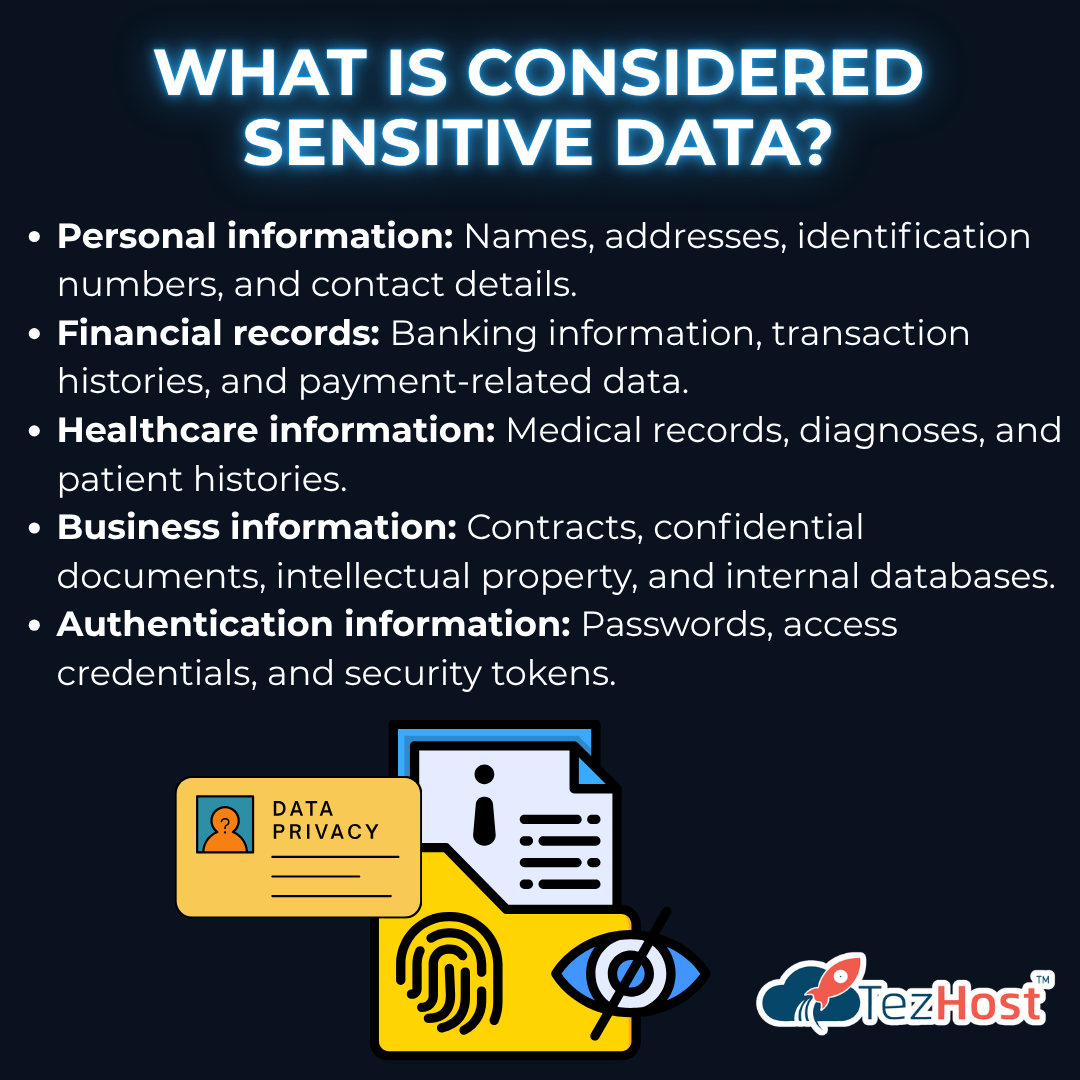
What Is Considered Sensitive Data?
Sensitive information can include:
- Personal information: Names, addresses, identification numbers, and contact details.
- Financial records: Banking information, transaction histories, and payment-related data.
- Healthcare information: Medical records, diagnoses, and patient histories.
- Business information: Contracts, confidential documents, intellectual property, and internal databases.
- Authentication information: Passwords, access credentials, and security tokens.
If this information is exposed, stolen, or modified without authorization, the consequences can include financial losses, legal problems, and reputational damage.
That’s why protecting sensitive data in the cloud requires more than simply purchasing a hosting plan.
It requires a clear security strategy.
Businesses can explore TezHost Cloud Servers to understand available infrastructure options and determine which configurations may support their applications.
Need help choosing a suitable cloud environment? Talk to a TezHost sales agent about your hosting and security requirements.
2. What Are the Cloud Compliance Requirements for Regulated Data?
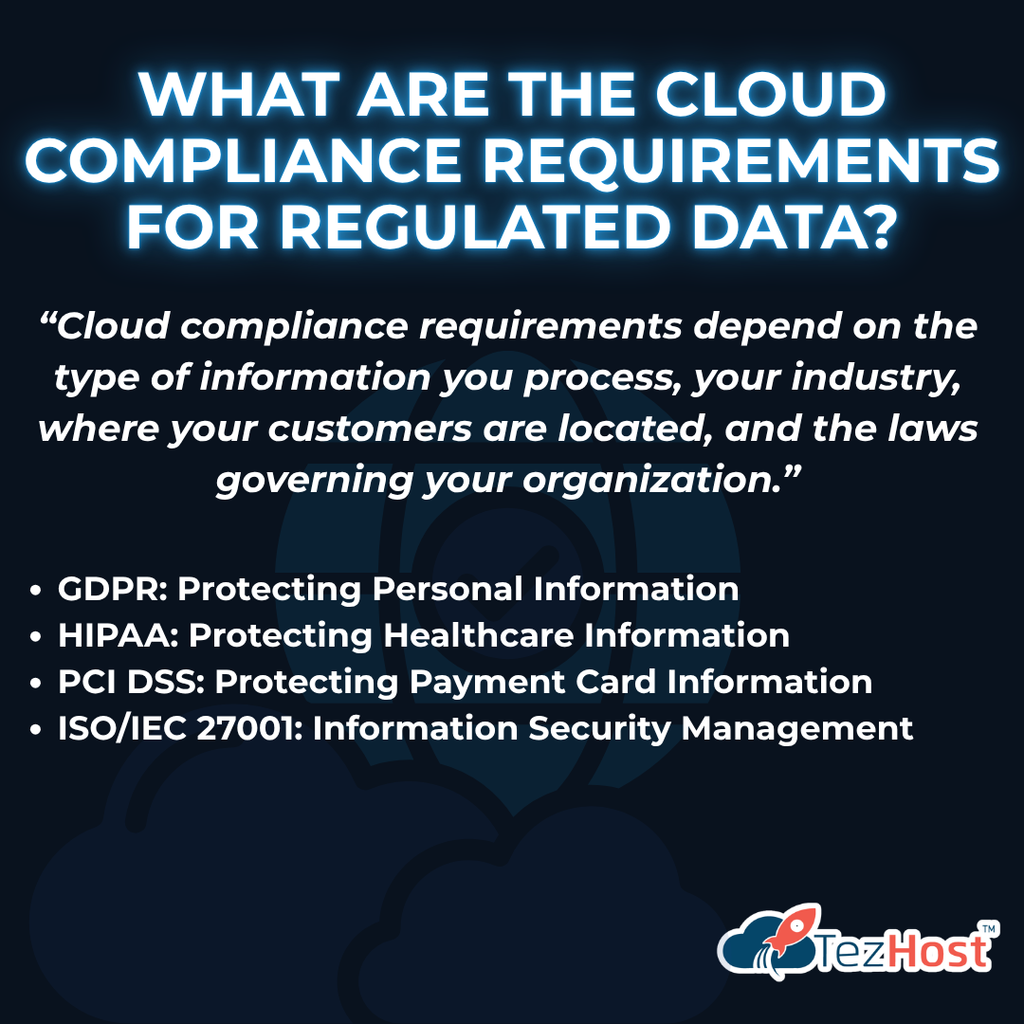
Cloud compliance requirements depend on the type of information you process, your industry, where your customers are located, and the laws governing your organization.
Businesses using cloud servers for regulated data must understand which regulations apply before selecting infrastructure.
Let’s look at some common examples.
GDPR: Protecting Personal Information
The General Data Protection Regulation (GDPR) establishes requirements for processing personal data within its territorial scope.
Organizations subject to GDPR must consider:
- Lawful processing of personal information.
- Appropriate technical and organizational security.
- Data subject rights.
- Data retention and deletion.
- International data transfer restrictions.
- Data processing agreements where required.
Using a cloud server does not automatically make an organization GDPR-compliant.
The business must ensure that its cloud arrangements support its obligations.
HIPAA: Protecting Healthcare Information
The Health Insurance Portability and Accountability Act (HIPAA) establishes requirements for protecting certain healthcare information in the United States.
Organizations subject to HIPAA may need safeguards such as:
- Access controls.
- Audit logging.
- Encryption where appropriate.
- Risk assessments.
- Security policies.
- Business Associate Agreements (BAAs) with applicable service providers.
Important: A cloud hosting provider must be willing and able to meet the relevant contractual requirements before a HIPAA-regulated organization stores electronic protected health information on its infrastructure.
PCI DSS: Protecting Payment Card Information
Businesses that store, process, or transmit payment card data may be subject to the Payment Card Industry Data Security Standard (PCI DSS).
PCI DSS addresses areas such as:
- Network security.
- Access restrictions.
- Vulnerability management.
- Monitoring and testing.
- Protection of stored account data.
- Secure transmission of payment information.
For many online businesses, using a reputable third-party payment gateway can reduce the amount of sensitive payment information they handle directly.
ISO/IEC 27001: Information Security Management
ISO/IEC 27001 is an international standard for information security management systems.
It helps organizations establish a structured approach to managing information security risks.
TezHost has obtained ISO/IEC 27001:2022 certification, reflecting its commitment to an established information security management framework.
However, certification alone does not guarantee that every customer application or hosting configuration meets all applicable regulations.
The takeaway: Protecting sensitive data in the cloud requires understanding your compliance obligations and verifying that your hosting environment can support them.
For organizations with specialized requirements, speak with the TezHost team before deploying regulated workloads.
3. What Are the 7 Essential Steps for Protecting Sensitive Data in the Cloud?
The most effective way to protect sensitive data in the cloud is to combine encryption, access management, network security, monitoring, backups, compliance reviews, and reliable infrastructure.
No single security feature can eliminate every risk.
Instead, businesses should build multiple layers of protection.
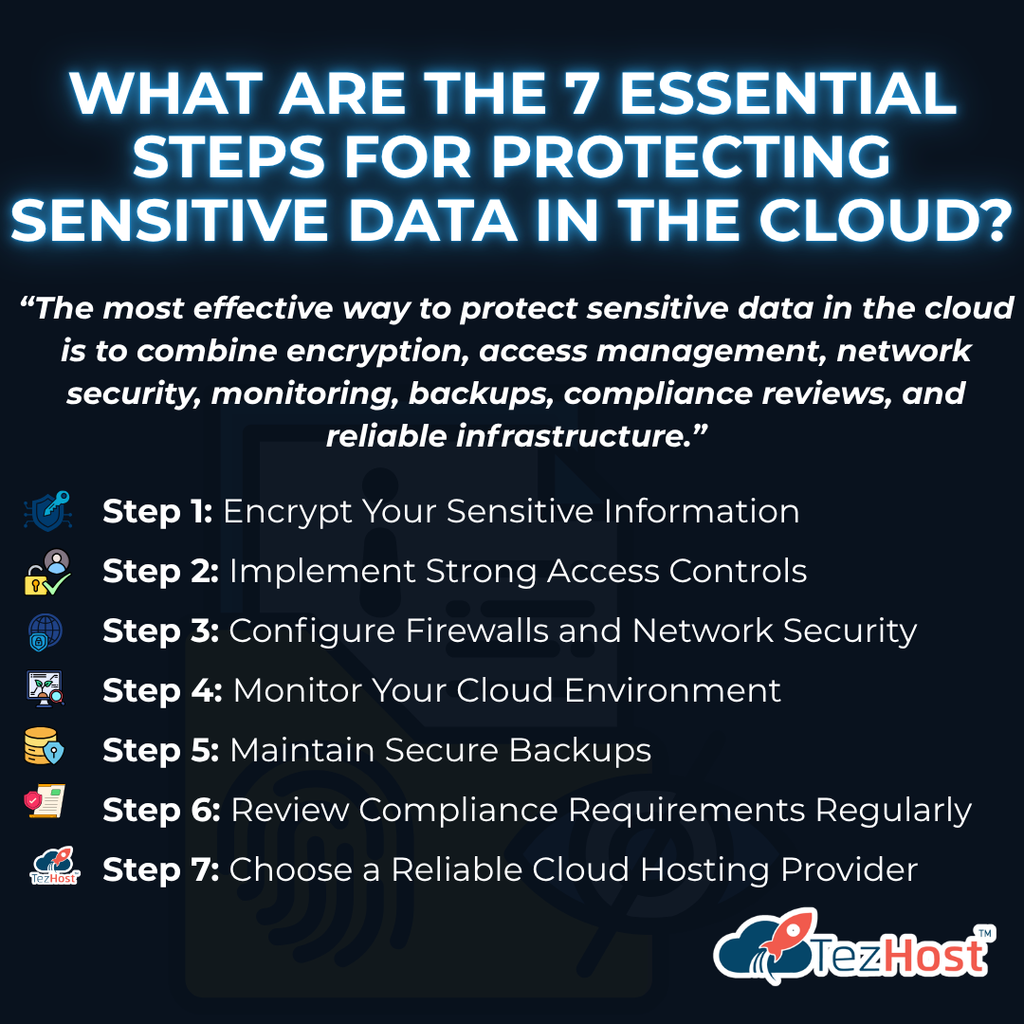
Step 1: Encrypt Your Sensitive Information
Encryption transforms readable information into a protected format that requires an authorized key to access.
Businesses should consider encryption in two situations:
Encryption at rest: Protects stored information, including databases, files, and backups.
Encryption in transit: Protects information moving between users, applications, and servers.
For example, HTTPS uses TLS encryption to protect information transmitted between a website and its visitors.
Businesses should also manage encryption keys securely and restrict access to them.
Step 2: Implement Strong Access Controls
Not everyone in your organization needs access to every file or database.
Giving employees unnecessary permissions increases the potential impact of compromised accounts.
A safer approach includes:
- Multi-factor authentication.
- Strong password policies.
- Role-based access controls.
- Separate administrative accounts.
- Regular permission reviews.
The principle is simple:
Give users access only to the information and systems they genuinely need.
Step 3: Configure Firewalls and Network Security
A firewall helps control incoming and outgoing network traffic.
Proper firewall configuration can reduce exposure to unauthorized connections and unnecessary services.
Businesses should also consider:
- Restricting administrative ports.
- Using secure remote access.
- Separating public and private services.
- Keeping operating systems updated.
- Removing unused applications.
For additional guidance, read our article on Cloud Server Security: 7 Powerful Steps for Secure Data.
Step 4: Monitor Your Cloud Environment
Cybersecurity is not something you configure once and forget.
Regular monitoring helps identify suspicious activities, unexpected changes, and potential vulnerabilities.
Useful monitoring practices include:
- Reviewing login attempts.
- Monitoring system logs.
- Tracking unusual resource consumption.
- Setting security alerts.
- Investigating unexpected configuration changes.
Early detection can significantly reduce the damage caused by security incidents.
Step 5: Maintain Secure Backups
Even well-protected systems can experience failures, accidental deletions, or cyberattacks.
That’s why backups are essential.
A good backup strategy should include:
- Regular backup schedules.
- Encrypted backup storage.
- Restricted backup access.
- Copies stored separately from production systems.
- Periodic restoration testing.
Businesses should also define how quickly they need to restore operations and how much data loss they can tolerate.
Remember: Backups are useful only when they can be restored successfully.
Step 6: Review Compliance Requirements Regularly
Regulations, applications, and business operations change.
Your security practices should evolve accordingly.
Businesses should periodically review:
- Applicable regulations.
- Data storage locations.
- Vendor agreements.
- Security policies.
- Employee permissions.
- Incident response procedures.
Regular reviews help identify gaps before they become serious problems.
Step 7: Choose a Reliable Cloud Hosting Provider
Your hosting provider plays an important role in your overall security strategy.
When evaluating providers, consider:
- Infrastructure reliability.
- Available security features.
- Administrative control.
- Backup options.
- Technical support.
- Data center locations.
- Contractual and compliance requirements.
For businesses managing sensitive data in the cloud, choosing the cheapest server without evaluating these factors can create unnecessary risks.
TezHost offers high-performance cloud servers with scalable resources and administrative control, allowing businesses to configure environments according to their technical needs.
Want to discuss your cloud requirements? Connect with a TezHost sales agent to explore available options.
4. Are Cloud Servers More Secure Than Dedicated Servers?
Neither cloud servers nor dedicated servers are automatically more secure. Security depends on the infrastructure, configuration, access controls, and management practices.
Businesses handling sensitive data in the cloud often compare cloud hosting with traditional dedicated servers.
Both solutions can provide strong security when configured correctly.
However, they offer different advantages.
| Feature | Cloud Servers | Dedicated Servers |
|---|---|---|
| Infrastructure | Virtualized computing environment | Physical server assigned to one customer |
| Scalability | Generally easier to scale | Often requires hardware upgrades |
| Hardware isolation | Shared physical infrastructure with logical isolation | Dedicated physical hardware |
| Administrative control | Depends on the service and configuration | Typically extensive control |
| Security | Depends on isolation, configuration, and monitoring | Depends on configuration and management |
| Compliance suitability | Possible with appropriate controls | Possible with appropriate controls |
| Cost structure | Often flexible | Generally more predictable for fixed resources |
| Best suited for | Growing applications and flexible workloads | Specialized workloads and dedicated hardware requirements |
Which Should Your Business Choose?
If your application needs flexible resources and the ability to expand as demand increases, cloud servers may be a practical choice.
If your organization requires dedicated physical hardware or specialized infrastructure controls, dedicated servers may be more appropriate.
Neither option removes your responsibility to protect information.
For a detailed comparison, read Cloud Servers vs. Dedicated Servers.
Still unsure? Ask a TezHost sales agent which infrastructure option best matches your workload.
5. How Is TezHost Revolutionizing Secure Cloud Hosting?
TezHost is making cloud infrastructure more accessible by combining high-performance hardware, flexible configurations, administrative control, and customer-focused technical support.
For many businesses, moving to the cloud can feel complicated.
There are technical specifications to understand, security settings to configure, and operational requirements to consider.
At TezHost, our approach focuses on simplifying these decisions while giving businesses the flexibility to build infrastructure around their needs.
High-Performance Cloud Infrastructure
TezHost Cloud Servers are built using modern infrastructure technologies, including:
- AMD EPYC processors for demanding workloads.
- DDR5 memory for responsive performance.
- Gen4 NVMe SSD storage for fast data access.
- Dedicated computing resources for predictable performance.
- Scalable configurations that support business growth.
These capabilities help businesses run websites, databases, applications, and online services efficiently.
Explore our Cloud Server Hosting Plans to compare available configurations.
Greater Control Over Your Environment
Businesses handling sensitive data in the cloud often need flexibility when implementing their security policies.
TezHost provides full root access with its cloud server offerings, giving customers administrative control over their server environments.
Depending on their technical requirements, businesses can configure:
- Operating system security.
- Firewall rules.
- User permissions.
- Application-level encryption.
- Monitoring tools.
- Database access policies.
This flexibility is especially valuable for organizations with internal IT teams or specialized applications.
However, administrative control also comes with responsibility. Customers must securely configure and maintain the systems they manage.
Flexible Infrastructure for Growing Businesses
Your infrastructure needs today may look completely different a year from now.
A growing eCommerce store may experience increased traffic.
A software company may launch additional applications.
An organization may need more processing power for its internal systems.
TezHost Cloud Servers allow businesses to increase computing resources as their requirements evolve.
This flexibility helps organizations avoid unnecessary infrastructure limitations.
Security Awareness and Practical Guidance
TezHost recognizes that businesses need more than powerful hardware.
They also need to understand how to protect their applications and information.
Our approach emphasizes security awareness, appropriate infrastructure selection, and practical guidance.
For businesses exploring enterprise cloud technologies, our article on Microsoft Azure Cloud Services: 5 Remarkable Reasons for Success explains how hybrid cloud flexibility, identity management, and enterprise security capabilities can support modern organizations.
Customer-Focused Support
Cloud hosting shouldn’t mean navigating every technical decision alone.
TezHost provides technical support to help customers address hosting-related questions and infrastructure concerns.
Whether you’re deploying an application, evaluating server resources, or considering a migration, having access to an experienced hosting team can make the process easier.
For businesses planning to store sensitive data in the cloud, discussing technical and regulatory requirements before deployment is particularly important.
Ready to explore a better cloud hosting experience?
Talk to a TezHost sales agent today and discover hosting options designed around your business requirements.
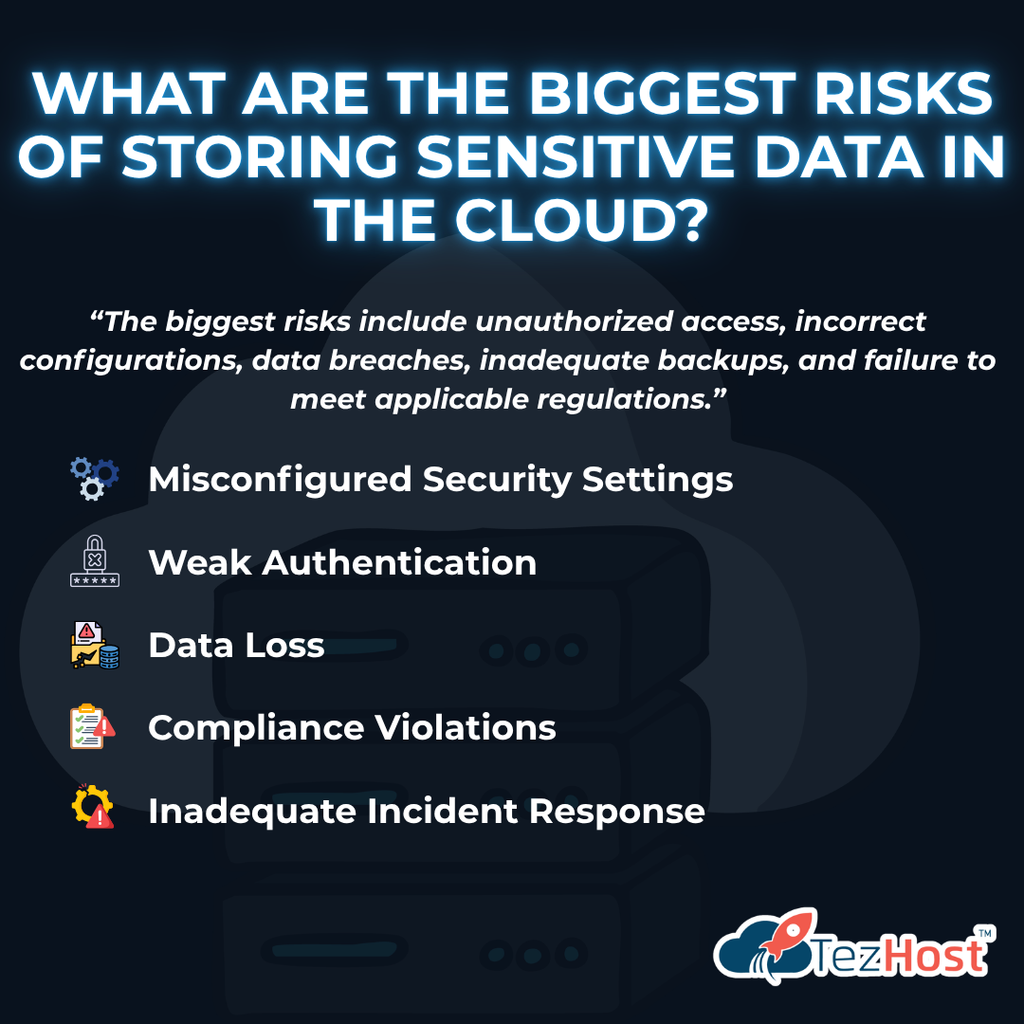
6. What Are the Biggest Risks of Storing Sensitive Data in the Cloud?
The biggest risks include unauthorized access, incorrect configurations, data breaches, inadequate backups, and failure to meet applicable regulations.
Although cloud technology offers many advantages, businesses should understand the potential risks.
Misconfigured Security Settings
A database or application accidentally exposed to the internet can create a serious security vulnerability.
Regular configuration reviews help reduce this risk.
Weak Authentication
Compromised passwords and excessive user permissions can allow attackers to access sensitive systems.
Multi-factor authentication and access restrictions provide additional protection.
Data Loss
Accidental deletion, hardware failures, ransomware, and software errors can affect important information.
Reliable backup and recovery procedures are essential.
Compliance Violations
Storing regulated information in an unsuitable location or without required safeguards may create legal problems.
Businesses should verify their obligations before migrating sensitive workloads.
Inadequate Incident Response
When a security incident occurs, delays can increase its impact.
Organizations should establish procedures for identifying, containing, investigating, and reporting incidents.
The important lesson: Sensitive data in the cloud can be protected effectively, but security requires continuous attention.
Choosing reliable infrastructure is an important starting point, not the entire solution.
7. How Do You Choose the Right Cloud Server for Regulated Data?
Choose a cloud server based on your application’s security needs, compliance obligations, required resources, data location, and available support.
Before purchasing cloud servers for regulated data, ask yourself a few important questions.
What Type of Information Will You Store?
A public business website has different security requirements from an application containing confidential medical records.
Classify your information before selecting infrastructure.
Where Must Your Data Be Stored?
Some regulations and contracts restrict where information can be stored or transferred.
Confirm the available hosting locations and any relevant data residency requirements.
What Security Controls Do You Need?
Consider encryption, access restrictions, logging, backups, and monitoring.
Determine which controls are provided by the hosting platform and which your organization must implement.
How Much Computing Power Do You Require?
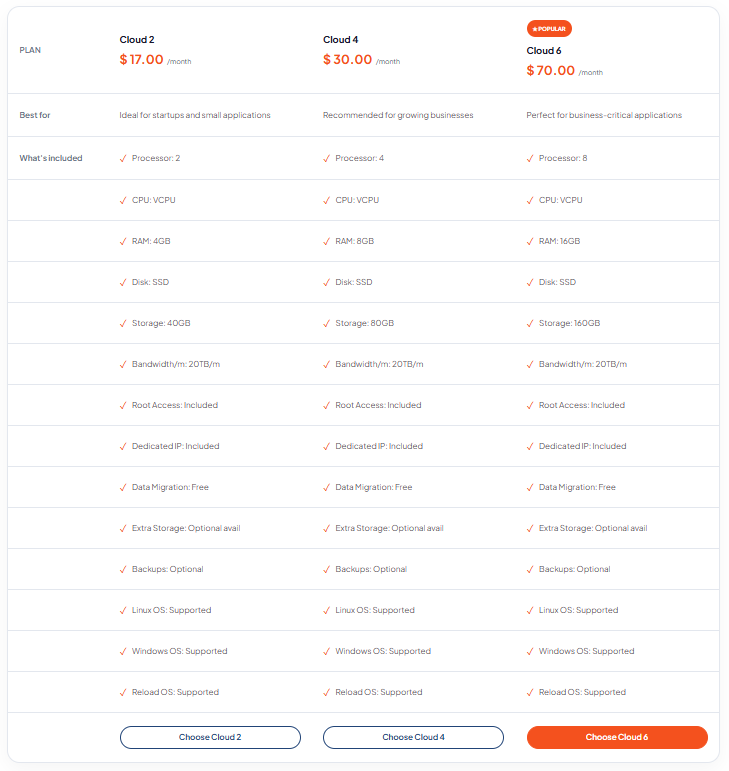
Review your expected CPU, RAM, storage, and bandwidth requirements.
Selecting suitable resources helps maintain application performance without unnecessary expenses.
Who Will Manage the Server?
Some organizations have dedicated IT teams.
Others need assistance with server administration and security configuration.
Make sure your hosting arrangement matches your team’s technical capabilities.
Can the Provider Support Your Compliance Obligations?
This is particularly important.
Before storing regulated information, verify whether the provider can meet your required contractual, technical, and operational conditions.
For example, organizations subject to HIPAA should confirm whether the necessary Business Associate Agreement is available.
Looking for scalable cloud infrastructure?
Explore TezHost Cloud Servers or speak directly with our sales team to discuss your requirements before making a decision.
Frequently Asked Questions About Sensitive Data in the Cloud
Is It Safe to Store Sensitive Data in the Cloud?
Yes. Sensitive data in the cloud can be protected using encryption, strong authentication, restricted access, monitoring, and secure backups. However, safety depends on proper configuration and ongoing security management.
Can Cloud Servers Be Used for Regulated Data?
Yes. Cloud servers for regulated data can be appropriate when the hosting environment, contractual arrangements, and security controls satisfy the applicable regulations. Compliance must be evaluated for each specific workload.
Is Cloud Hosting GDPR-Compliant?
Cloud hosting can support GDPR compliance, but using a cloud provider does not automatically make a business compliant. Organizations must meet their own legal obligations, including appropriate security and data processing requirements.
Can I Store Healthcare Records on Cloud Servers?
Yes, where applicable healthcare regulations and contractual requirements are satisfied. For HIPAA-regulated information, organizations should verify the required safeguards and Business Associate Agreement before uploading protected health information.
Do I Need Encryption for Cloud Storage?
Encryption is strongly recommended for sensitive information. Depending on the applicable regulations and risk assessment, specific encryption controls may be required or expected.
What Is the Difference Between Cloud Security and Cloud Compliance?
Cloud security focuses on protecting systems and information from threats. Cloud compliance focuses on meeting applicable laws, regulations, standards, and contractual obligations.
Both are important for organizations managing sensitive data in the cloud.
Does TezHost Offer Cloud Servers for Businesses?
Yes. TezHost provides scalable cloud server hosting with modern computing resources, root access, and infrastructure options for business applications.
Organizations with regulated workloads should discuss their specific requirements with TezHost before deployment.
Visit TezHost Cloud Servers for available plans.
Conclusion: Protect Your Data Without Limiting Your Business
Sensitive data in the cloud can be managed securely when businesses combine suitable infrastructure with effective security practices and a clear understanding of their compliance responsibilities.
The cloud is no longer simply an alternative to traditional servers.
It has become an important part of how businesses build applications, serve customers, and manage information.
However, protecting sensitive information requires more than choosing a server with impressive specifications.
Encryption, access management, monitoring, backups, and regulatory compliance all play essential roles.
At TezHost, our goal is to make powerful cloud infrastructure accessible to businesses that value performance, flexibility, and reliability.
Whether you’re launching a new application, expanding your online operations, or evaluating infrastructure for confidential information, choosing the right hosting environment is an important step.
Your business deserves cloud infrastructure that supports growth without overlooking security.
Ready to Take Your Business to the Cloud?
Discover the hosting options available at TezHost.
Explore your options:
- Explore TezHost Cloud Server Plans
- Register and Get Started with TezHost
- Talk to a TezHost Sales Agent
- Register a Domain for Your Business
- Visit the TezHost Website
Build confidently. Scale intelligently. Keep security at the center of your cloud strategy.