Choosing a web hosting billing cycle is more than deciding whether to pay monthly or annually. It affects your infrastructure budget, renewal expenses, cash flow, and the flexibility you have when your website or application grows.
A monthly hosting plan may require less money upfront, while an annual package may offer a lower effective monthly price. But the cheapest option is not always the most cost-effective one. You also need to consider server performance, resource allocation, application requirements, renewal rates, and cancellation conditions.
For a new website, monthly payments may be a sensible way to test a hosting environment. For an established business with predictable workloads, annual billing may provide better value.
If you’re comparing hosting options, register with TezHost to explore available services. You can also talk to a TezHost sales agent to discuss your website requirements and available plans.
Let’s examine the technical and financial differences so you can choose the right web hosting billing cycle for your project.
1. What Is a Web Hosting Billing Cycle?
A web hosting billing cycle is the recurring period for which a hosting provider charges you. Depending on the provider and package, you may be able to pay monthly, quarterly, semi-annually, annually, or for multiple years.
The billing period determines when you pay for the service. It does not necessarily determine how long you are contractually required to remain with the provider.

For example, a monthly plan may renew every 30 days, while an annual plan usually requires payment for 12 months in advance. However, cancellation rights, refunds, and minimum commitments depend on the provider’s terms.
Common Hosting Billing Options
| Billing option | Payment frequency | Common use |
|---|---|---|
| Monthly | Every month | New websites and testing |
| Quarterly | Every three months | Short-term business projects |
| Semi-annual | Every six months | Growing websites |
| Annual | Once per year | Established websites |
| Multi-year | Every two or more years | Long-term projects |
Your web hosting billing cycle should reflect how long you expect to use the service, how much money you can allocate upfront, and how predictable your technical requirements are.
A monthly payment option is useful when flexibility matters. A longer hosting commitment length may be more practical when the website, application, and infrastructure requirements are already established.
2. Monthly vs Annual Hosting Contract: What Is the Difference?
The main difference between a monthly vs annual hosting contract is the balance between payment flexibility and long-term cost.
Monthly hosting spreads the expense across smaller payments. Annual hosting requires a larger upfront payment but may reduce the effective monthly rate.
Consider this example:
| Cost comparison | Monthly billing | Annual billing |
|---|---|---|
| Monthly equivalent | $5 | $4 |
| Payment frequency | Monthly | Annually |
| Total for 12 months | $60 | $48 |
| Initial payment | $5 | $48 |
These are illustrative prices, not TezHost quotations. In this example, annual billing saves $12 over the year, but requires a larger initial payment.

Why Does Annual Hosting Often Cost Less?
Hosting providers may offer lower rates for longer payment periods because they receive revenue in advance and have fewer recurring payment transactions to process.
However, a monthly vs annual hosting contract should be evaluated using the total amount payable, not just the advertised monthly equivalent.
For example, a promotional annual package might be inexpensive during the first year but renew at a higher regular rate. You should calculate the cost across the period you actually intend to use the service.
Before selecting a hosting commitment length, compare the promotional price, renewal amount, taxes, add-ons, and any applicable licensing charges.
You can also read our guide to web hosting renewal costs to understand how renewal pricing affects your long-term hosting budget.
3. What Are the Advantages of Monthly Hosting?
Monthly hosting reduces the upfront financial commitment and gives customers more opportunities to reassess their hosting requirements.
A monthly web hosting billing cycle can be particularly useful for startups, developers, freelancers, and businesses testing new digital projects.

Lower Initial Investment
You don’t need to pay for an entire year before using the service. This allows you to allocate available funds to other priorities, such as website development, marketing, software, and customer acquisition.
For a new business, preserving working capital can be more important than securing a small annual discount.
Easier Testing and Evaluation
A new hosting environment needs to be evaluated under real workloads.
You may need to test:
- CPU and RAM consumption.
- Database response times.
- Website loading speed.
- Application compatibility.
- Network performance.
- Backup and restoration procedures.
- Technical support quality.
A monthly vs annual hosting contract can make a significant difference during this evaluation stage. Monthly billing lets you assess the service before paying for a longer period, subject to the provider’s cancellation conditions.
More Flexibility During Business Changes
Your hosting requirements may change after a website launches. You might need more RAM, additional storage, a different control panel, or a move from shared hosting to a VPS or cloud server.
A shorter hosting commitment length may be useful while these decisions are still being made.
Easier Budget Distribution
Monthly payments spread hosting expenses across the year. This can help businesses manage cash flow, especially when revenue is inconsistent.
The limitation: Monthly hosting may cost more over a full year. You also need to monitor recurring invoices, payment failures, and renewal dates.
4. What Are the Advantages of Annual Hosting?
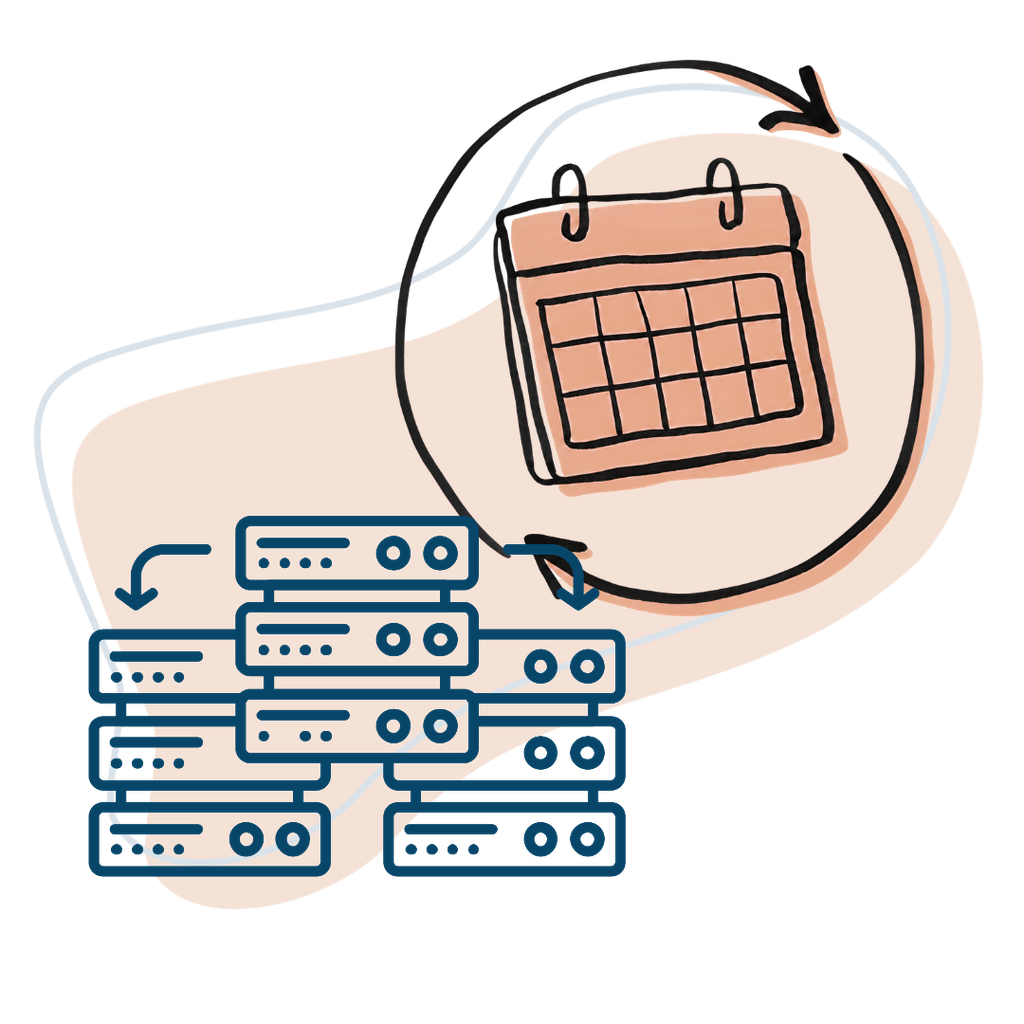
Annual hosting can reduce the effective monthly cost, simplify payment administration, and make infrastructure expenses easier to forecast.
For established websites with predictable resource requirements, an annual web hosting billing cycle may be a practical choice.
Potential Cost Savings
Some providers offer discounted annual packages compared with their monthly rates.
However, don’t assume every annual plan is cheaper. Compare the actual annual invoice with 12 monthly payments and include any setup charges, taxes, licenses, and optional services.
More Predictable Infrastructure Budgets
Businesses can include annual hosting expenses in their yearly operating budgets.
This is particularly useful when a website supports regular customer enquiries, online transactions, internal operations, or application services.
Fewer Payment Transactions
Annual billing reduces the number of recurring transactions and payment reminders you need to manage.
It can also simplify expense tracking because the hosting payment is recorded as a single annual expense, subject to your accounting treatment.
Suitable for Stable Workloads
If your website has consistent traffic, tested software, predictable resource consumption, and a reliable hosting environment, a longer hosting commitment length may make financial sense.
But annual billing should not prevent you from upgrading your infrastructure when required.
The limitation: You pay more upfront. If your website closes, changes direction, or outgrows the service, refunds and unused service credits depend on the provider’s terms.
5. Which Hosting Commitment Length Is Best for Your Project?
The right hosting commitment length depends on the project’s expected lifespan, technical maturity, available budget, and resource requirements.
There is no universal rule that monthly or annual billing is better for every website.

Personal Websites and New Blogs
Consider monthly billing initially.
A new website may require several rounds of development, theme configuration, plugin testing, and performance optimization.
Monthly payments can help you evaluate the hosting environment before making a longer commitment.
Once traffic and resource requirements become more predictable, you can compare annual pricing.
Small Business Websites
Choose based on budget and stability.
An established business website that generates leads or supports customer communication may be suitable for annual hosting.
A newly launched business with uncertain revenue may prefer monthly payments while it establishes its online presence.
Ecommerce Websites
Prioritize reliability and infrastructure before billing discounts.
An online store depends on application performance, database availability, payment integrations, security, and backups.
Before comparing a monthly vs annual hosting contract, test the hosting environment under realistic traffic conditions. Check resource limits and understand how upgrades are handled.
Once the infrastructure has been evaluated, annual billing may offer better value if the service meets your requirements.
Developers and SaaS Applications
Start with flexibility while testing; consider longer terms after validation.
Developers may need to test runtime compatibility, deployment workflows, database performance, background processes, and resource usage.
TezHost offers dedicated Node.js hosting and Python hosting solutions for supported application environments.
These services are relevant to developers building APIs, web applications, and dynamic platforms. Review the actual plan specifications to confirm that the required runtime, application dependencies, and resource limits are supported.
For these projects, the web hosting billing cycle should be considered alongside application stability and deployment requirements.
Agencies and Freelancers
Match the billing period to the client agreement.
If you manage multiple websites, consider whether each client has a short-term or long-term arrangement.
Annual hosting may reduce costs for established client projects. Monthly hosting may be more suitable for temporary campaigns or projects where the client has not made a long-term commitment.
Your client agreement should clarify who pays for renewals, who controls the hosting account, and who is responsible for migration or cancellation.
6. What Should You Check Before Choosing a Hosting Billing Cycle?
Before committing to a monthly or annual plan, compare the complete financial and technical terms. A low advertised price does not tell you everything about the service.
Use this checklist before selecting your web hosting billing cycle.

1. Promotional Price and Renewal Price
Some providers advertise introductory rates that apply only to the first billing period.
Check the regular renewal price before purchasing. Calculate the total cost over two or three years if you expect to keep the service for that long.
A monthly vs annual hosting contract should be compared using the actual amount payable, not just a promotional monthly equivalent.
2. Refund and Money-Back Conditions
Check whether the provider offers a money-back guarantee and which services qualify.
Domain registrations, licenses, add-ons, and certain other services may have different refund conditions.
Don’t assume an annual payment is automatically refundable if you cancel early.
3. Cancellation and Contract Terms
Find out whether you can cancel at any time, whether advance notice is required, and what happens to unused service periods.
Monthly billing does not automatically mean unrestricted cancellation. The contract terms determine your rights and obligations.
4. Automatic Renewal Settings
Check whether the plan renews automatically and when the next payment will be processed.
Keep your payment method up to date and maintain access to the email address associated with the hosting account.
5. Technical Resources and Limits
Compare the actual specifications:
- CPU allocation and processor limits.
- RAM allocation.
- SSD or NVMe storage.
- Monthly bandwidth allowance.
- Database limits.
- Email account limits.
- Backup frequency and retention.
- Operating system and control panel support.
For cloud infrastructure, also consider data transfer charges. Our guide to cloud data transfer costs explains why network usage and transfer policies can affect the total cost of running applications.
The hosting commitment length should never be more important than whether the server can support your workload.
6. Payment Methods and Transaction Fees
Check which payment methods the provider accepts and whether your bank or payment service applies currency conversion or international transaction fees.
You can review TezHost payment methods for the available payment options.
7. Upgrade and Migration Policies
Your website may need additional resources as traffic increases.
Check whether you can upgrade your package, change hosting types, or migrate to another environment. Ask whether the migration involves additional charges or downtime.
A longer hosting commitment length should not prevent you from making necessary infrastructure changes.
7. How Is TezHost Making Hosting More Flexible for Businesses?
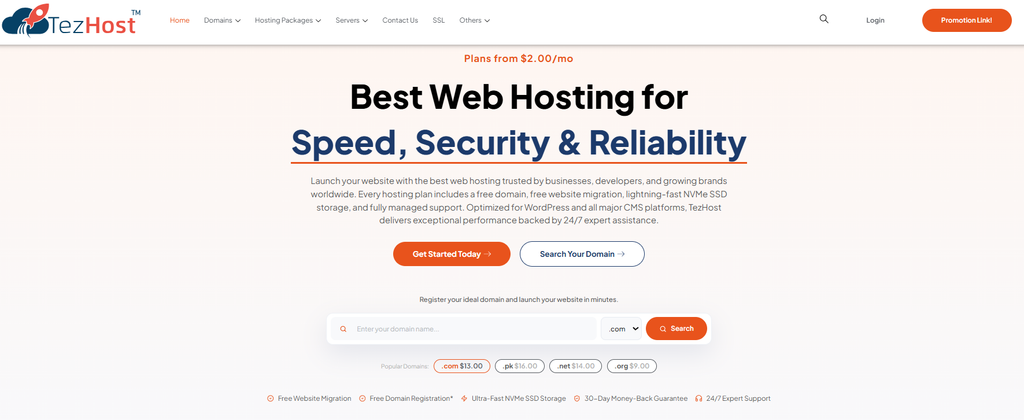
TezHost focuses on providing hosting options for different technical requirements, business sizes, and project stages. Instead of treating every customer as if they need the same server configuration, the aim is to help customers select an appropriate service.
A personal blog, a business website, and a resource-intensive application have different infrastructure requirements. Their payment preferences may also differ.
Hosting for Different Workloads
TezHost offers services for a range of use cases:
- Web hosting: For personal websites, blogs, and business websites.
- Node.js hosting: For supported JavaScript applications and APIs.
- Python hosting: For supported Python applications and development projects.
- Cloud servers: For customers who need root access and control over server resources.
- Domain registration: For businesses and individuals establishing their online identity.
Explore the TezHost website to compare available services.
Flexible Payment Options
Eligible hosting plans provide different billing periods, allowing customers to compare monthly and annual payments.
For example, the published TezHost cloud server pricing includes these plans:
| Plan | Monthly price | Annual total |
|---|---|---|
| Cloud 2 | $17 | $204 |
| Cloud 4 | $30 | $360 |
The annual figures above represent 12 monthly payments. Check the live checkout price and applicable terms before purchasing, as promotions and billing options can change.
Both plans list root access, a dedicated IP, 20TB monthly bandwidth, free data migration, and Linux and Windows support. Backups are optional.
Visit the TezHost Cloud Servers page for current specifications and pricing.
Multiple Payment Methods
Customers can review available payment methods and select an option that suits their payment preferences.
Visit the TezHost Payment Methods page for current details.
Guidance Before You Commit
A hosting plan should be selected according to the resources your website or application actually needs.
TezHost encourages customers to review specifications, renewal costs, and service terms before making a longer commitment.
If you’re unsure which web hosting billing cycle is appropriate, talk to a TezHost sales agent. You can also register with TezHost to explore available services.
The objective is to help customers make informed hosting decisions based on infrastructure requirements and budget—not just the lowest advertised price.
Frequently Asked Questions About Web Hosting Billing Cycles
Is Monthly or Annual Web Hosting Better?
Monthly hosting is useful when flexibility and lower upfront costs are priorities. Annual hosting may offer better value for established websites with predictable requirements. Compare the total price and contract terms before deciding.
Does Annual Hosting Always Save Money?
No. Some providers offer annual discounts, while others charge the equivalent of 12 monthly payments. Compare the actual invoice, renewal price, and additional charges.
Can I Change from Monthly to Annual Hosting?
Many providers allow customers to change billing periods, but the process depends on the plan and service agreement. Confirm whether the change affects your renewal date, promotional pricing, or invoice.
Does Monthly Hosting Mean I Can Cancel Anytime?
Not necessarily. Monthly billing describes how often you pay. Cancellation rights depend on the provider’s terms, including any notice period or minimum commitment.
What Happens When Annual Hosting Expires?
If you don’t renew, the provider may suspend or eventually terminate the service according to its policies. Your website, email, and stored data may become inaccessible. Keep independent backups and monitor renewal reminders.
Should Developers Choose Monthly or Annual Hosting?
Monthly billing can be useful while testing application compatibility, performance, and server resources. Once the environment is stable and requirements are predictable, annual billing may be worth considering.
Are Domain Registration and Hosting Billed Together?
Not necessarily. Domain registration and web hosting are separate services, even when purchased from the same provider. Their renewal dates and billing periods may differ. Explore TezHost domain registration for available domain options.
Conclusion: Choose a Billing Cycle That Supports Your Growth
The right web hosting billing cycle should match your budget, technical requirements, project stability, and expected service duration.
Monthly hosting offers smaller upfront payments and flexibility. Annual hosting may simplify budgeting and provide better value when the pricing structure and service conditions make it worthwhile.
Before signing up, compare the full cost, renewal rates, cancellation conditions, refund policy, automatic renewal settings, and technical resources.
For a new website or application, monthly hosting can be a sensible way to evaluate the environment. For an established business with predictable workloads, annual hosting may be the more economical choice.
At TezHost, the focus is on helping customers find hosting solutions that fit their infrastructure requirements and business goals.
Ready to explore your hosting options?
Register with TezHost and compare available services.
Have questions about pricing, billing periods, or server specifications? Talk to a TezHost sales agent before choosing your plan.
Choose a hosting commitment that supports your business—not simply the lowest advertised price.