Domain name security is one of the most important yet overlooked aspects of protecting a business online. Your domain isn’t just your website address. It’s your digital identity, your brand’s reputation, and the connection between your business and its customers.
Now imagine this.
You’ve spent years building your business. Your website is attracting customers, your email accounts are handling important conversations, and your brand is finally gaining recognition.
Then one morning, your website stops working.
Your customers can’t reach you.
Your business emails aren’t being delivered.
And when you investigate, you discover that someone has gained unauthorized control of your domain.
Scary, isn’t it?
Unfortunately, domain hijacking, phishing, unauthorized transfers, and expired registrations can create serious problems for businesses of every size.
The good news?
Many domain-related risks can be reduced with a few practical security measures.
At TezHost, we believe protecting your online identity should be a priority from the moment you register your domain.
Whether you’re launching a new business or securing an established website, you can register with TezHost and explore domain registration and hosting services.
Not sure how to secure your business domain? Talk to a TezHost sales agent to discuss your options.
In this guide, we’ll explore seven essential domain security tips to help protect your domain, reduce common threats, and maintain control of your business’s online identity.
1. What Is Domain Name Security, and Why Does It Matter?
Domain name security refers to the practices and safeguards used to prevent unauthorized access, changes, transfers, misuse, or loss of control over a registered domain.
Your domain name is connected to several essential business services.
These may include:
- Your company website.
- Professional email addresses.
- Customer portals.
- Online stores.
- Business applications.
- Brand identity and marketing campaigns.
If someone gains unauthorized control of your domain, they may be able to change its DNS settings, redirect visitors, interfere with email delivery, or attempt to transfer the registration.
That’s why domain name security should be treated as a business priority rather than an optional technical task.
What Happens If Your Domain Is Compromised?
A compromised domain can lead to:
Website Downtime: Customers may be unable to access your website.
Email Disruption: Business communications may stop working or be redirected.
Brand Damage: Attackers may impersonate your business.
Financial Losses: Interrupted operations and recovery efforts can become expensive.
Customer Trust Issues: Visitors may lose confidence if your domain is used for fraudulent activities.
The key takeaway: Your domain connects customers to your business. Protecting it helps protect the trust you’ve worked hard to build.
If you’re planning to establish a new online presence, read our guide on Choosing the Perfect Domain Name for Your Business.
2. What Are the 7 Essential Domain Security Tips Every Business Should Follow?
The most effective domain security strategy combines strong authentication, registrar locks, reliable renewals, DNS protection, account monitoring, and careful registrar selection.
Here are seven practical steps every business should consider.
1. Enable Two-Factor Authentication
Your domain registrar account controls important settings related to your online identity.
If someone gains access to that account, they may be able to change your domain’s configuration.
Two-factor authentication (2FA) adds another layer of protection beyond your password.
Even if an attacker obtains your password, they may still need a second authentication factor to access your account.
Best practices:
- Use a strong, unique password.
- Enable 2FA wherever supported.
- Prefer an authenticator app or security key when available.
- Avoid sharing login credentials.
- Review account recovery settings.
Remember: A strong password is important, but additional authentication makes unauthorized access more difficult.
2. Activate Domain Transfer Lock
A domain transfer lock helps prevent unauthorized transfers to another registrar.
Many registrars offer a transfer-lock feature that prevents standard transfer requests while the lock is active.
However, it doesn’t necessarily prevent DNS changes or other modifications made through a compromised account.
How to protect your domain:
- Check whether transfer lock is enabled.
- Keep it active unless you’re intentionally transferring the domain.
- Verify transfer requests carefully.
- Contact your registrar if you notice suspicious activity.
For businesses managing valuable domains, additional registry-level locking services may be worth considering where available.
3. Keep Your Domain Registration Updated
Imagine losing access to your business domain because you forgot to renew it.
It sounds simple, but expired registrations can create serious operational problems.
Depending on the domain extension and registrar policies, an expired domain may stop resolving, enter a recovery period, or eventually become available for registration by someone else.
Domain security tips for renewals:
- Enable automatic renewal.
- Keep your payment method updated.
- Maintain a backup payment option if supported.
- Review renewal notifications.
- Register important domains for multiple years when appropriate.
- Keep your registrar contact information accurate.
A domain renewal reminder could save your business from an expensive interruption.
4. Protect Your DNS Settings
The Domain Name System (DNS) connects your domain name to the services that use it.
When someone enters your website address, DNS helps direct them to the correct server.
Unauthorized DNS changes can redirect visitors, disrupt email services, or interfere with applications.
To strengthen domain name security:
- Restrict access to DNS management.
- Review DNS records periodically.
- Monitor unexpected changes.
- Enable DNSSEC where supported and correctly configured.
- Remove unnecessary or outdated DNS records.
What is DNSSEC?
DNS Security Extensions (DNSSEC) use cryptographic signatures to help validate DNS responses and protect against certain forms of DNS spoofing or tampering.
However, DNSSEC doesn’t encrypt website traffic or prevent someone with authorized DNS management access from making malicious changes.
5. Watch Out for Phishing and Domain Scams
Cybercriminals frequently impersonate legitimate companies to trick users into revealing passwords or approving fraudulent requests.
You might receive an email claiming:
“Your domain will expire in 24 hours. Click here immediately to prevent suspension.”
The message looks official.
The logo appears familiar.
But the link leads to a fraudulent website.
How to stay protected:
- Verify the sender and destination before clicking.
- Access your registrar account through a trusted bookmark.
- Never share passwords or authentication codes.
- Be cautious of urgent payment requests.
- Confirm unusual account notifications through official support channels.
Phishing awareness is an important part of domain name security.
6. Monitor Your Domain Regularly
Many business owners register a domain and rarely check its settings again.
Unfortunately, security threats don’t disappear just because everything seems to be working.
Regular monitoring helps identify unusual changes before they create bigger problems.
Consider reviewing:
- Domain registration status.
- Expiration dates.
- DNS records.
- Nameserver settings.
- Registrar account activity.
- Administrative contact information.
- SSL/TLS certificate status.
You can also use appropriate monitoring tools to receive alerts when important DNS records change.
A few minutes of regular monitoring can help prevent hours of troubleshooting later.
7. Choose a Reliable Domain Registrar
Your registrar plays an important role in managing your domain registration.
Choosing a provider based only on the lowest advertised price may not be the best long-term decision.
Look for a registrar that provides:
- Clear renewal pricing.
- Secure account access.
- Domain transfer controls.
- DNS management options.
- Reliable customer support.
- Transparent domain policies.
- Straightforward account recovery procedures.
The best registrar for your business should offer the features and assistance you need to maintain control of your domain.
For more guidance, read our article on Choosing a Domain Registrar.
Need help getting started? Talk to a TezHost sales agent about available domain registration services.
3. What Are the Biggest Threats to Domain Name Security?
The biggest threats to domain name security include domain hijacking, phishing, unauthorized DNS changes, fraudulent transfers, and accidental domain expiration.
Understanding these threats makes it easier to protect your business.
| Domain Security Threat | What It Means | How to Reduce the Risk |
|---|---|---|
| Domain Hijacking | Unauthorized control of a domain | Strong authentication and account monitoring |
| Phishing | Fraudulent attempts to steal credentials | Verify emails and avoid suspicious links |
| DNS Hijacking | Unauthorized changes to DNS settings | Restrict DNS access and monitor records |
| Unauthorized Transfers | Moving a domain without the owner’s approval | Enable domain transfer lock |
| Domain Expiration | Losing registration rights after failing to renew | Enable auto-renewal and reminders |
| Account Compromise | Attackers gain access to registrar credentials | Unique passwords and 2FA |
| Domain Spoofing | Attackers imitate a legitimate domain | Monitor impersonation and use email authentication |
Can Hackers Steal Your Domain Name?
Yes. Attackers may gain control of a domain through compromised registrar accounts, social engineering, or weaknesses in account recovery and transfer procedures.
That’s why businesses should secure their registrar accounts and carefully control who can manage domain settings.
Can Someone Impersonate Your Business Domain?
Yes. Attackers can register lookalike domains or forge email sender information to impersonate legitimate businesses.
Organizations can reduce email spoofing risks by correctly configuring SPF, DKIM, and DMARC for their domains.
These technologies help receiving email systems authenticate messages and apply policies to suspicious mail.
However, they don’t prevent attackers from registering separate lookalike domains.
The lesson: Domain security involves protecting both your registration and your brand’s online identity.
4. How Is TezHost Revolutionizing Domain Registration and Security?
TezHost is making domain registration and management more accessible by combining domain services, hosting solutions, and customer-focused assistance in one ecosystem.
At TezHost, we understand that a domain name represents much more than a web address.
It’s often the first thing customers associate with your business.
It’s printed on marketing materials, connected to professional email accounts, and used across your digital platforms.
Losing control of it can affect your entire online presence.
That’s why our approach focuses on helping businesses establish and manage their digital identities with greater confidence.
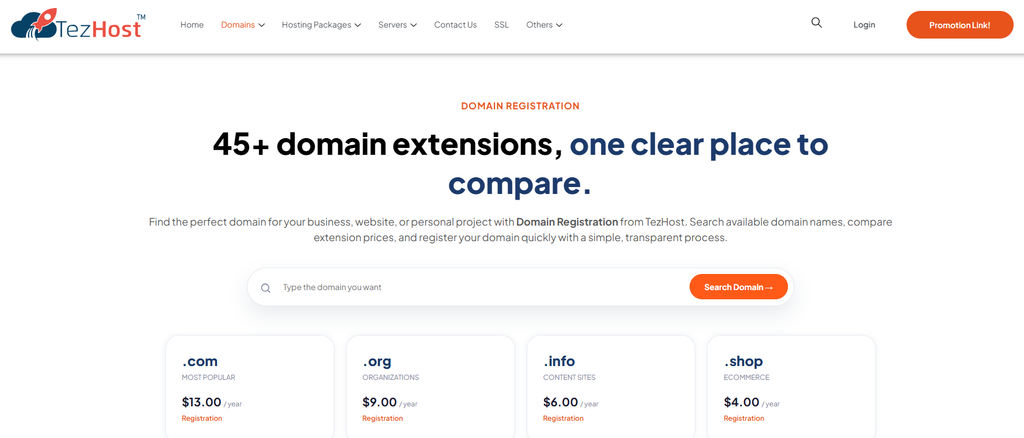
Convenient Domain Registration
TezHost provides domain registration services for businesses, entrepreneurs, and individuals.
Whether you’re launching your first website or expanding an existing brand, you can search for available domain names and explore different extensions.
Visit TezHost Domain Registration to get started.
Domain and Hosting Services Together
Managing your domain and hosting through the same provider can simplify certain administrative tasks.
TezHost offers domain registration alongside services such as:
- Shared web hosting.
- WordPress hosting.
- VPS hosting.
- Cloud servers.
- Dedicated servers.
This gives businesses the convenience of exploring multiple infrastructure services through one provider.
However, domain and hosting security still require appropriate account protection, access management, and ongoing maintenance.
Helping Businesses Make Informed Decisions
Choosing a domain name isn’t only about finding something memorable.
Businesses should also consider:
- Brand relevance.
- Domain extension.
- Renewal pricing.
- Registrar policies.
- Domain management features.
- Long-term ownership and control.
TezHost encourages customers to evaluate these factors before registering important business domains.
Customer-Focused Technical Assistance
Not every business owner is familiar with DNS records, nameservers, domain transfers, or renewal procedures.
Our team helps customers understand available domain and hosting services and address related technical questions.
For security-sensitive requirements, customers should confirm which protective features are supported for their selected domain extension and account.
Our goal is simple: Help businesses establish a reliable online presence while making domain management easier to understand.
Supporting Businesses as They Grow
A small business might begin with one domain and a basic website.
As it expands, it may need additional domains, professional email, stronger infrastructure, or new applications.
TezHost provides a range of hosting and domain services that can support businesses through different stages of growth.
Your domain is the starting point of your online identity. We’re here to help you build on that foundation.
Ready to secure your business’s digital presence?
Explore TezHost Domains or connect with our sales team to discuss your requirements.
5. How Can You Protect Your Domain from Hijacking?
To protect your domain from hijacking, secure your registrar account, enable available transfer protections, restrict administrative access, and monitor domain changes.
Domain hijacking can affect websites, email services, and customer communications.
Fortunately, businesses can reduce the risk through a few practical steps.
Secure Your Registrar Account
Use a unique password and enable multi-factor authentication wherever available.
Avoid sharing administrative credentials with employees or external contractors.
Restrict Account Access
Only authorized personnel should be able to manage your domain.
If multiple team members require access, use separate accounts and role-based permissions when supported.
Verify Domain Transfer Requests
Treat unexpected transfer notifications as potential warning signs.
Contact your registrar through an official support channel if you notice unfamiliar activity.
Maintain Accurate Contact Information
Keep your registration contact details updated so you can receive important notifications and complete legitimate recovery procedures.
Establish a Recovery Plan
Document your domain registrar, account ownership details, renewal schedule, and authorized administrators.
Store recovery information securely.
Domain name security becomes much easier to manage when responsibilities and procedures are clearly defined.
6. Is Domain Privacy the Same as Domain Security?
No. Domain privacy and domain security serve different purposes, although both can contribute to protecting your online identity.
Domain privacy primarily concerns the visibility of registration contact information.
Depending on the domain extension, registrar, and applicable policies, some registration details may be publicly accessible or redacted.
Privacy or proxy services may provide additional protection where available.
Domain security focuses on preventing unauthorized access, transfers, changes, and misuse.
Here’s a quick comparison.
| Feature | Domain Privacy | Domain Security |
|---|---|---|
| Main Purpose | Limit exposure of registration details | Protect domain control and configuration |
| Protects Against | Some unwanted contact and information exposure | Unauthorized access and domain changes |
| Common Features | Privacy or proxy registration services | 2FA, transfer locks, DNS monitoring |
| Prevents Domain Hijacking? | No | Helps reduce the risk |
| Prevents Domain Expiration? | No | Renewal management helps |
| Important for Businesses? | Yes, where applicable | Yes |
The best approach is to use appropriate privacy measures alongside strong domain security practices.
7. How Often Should Businesses Review Domain Security?
Businesses should monitor critical domain settings continuously where practical and conduct a formal domain security review at least every few months.
The appropriate frequency depends on the value of the domain and the services connected to it.
For example, an ecommerce business that depends entirely on its website may need more frequent monitoring than a personal blog.
Monthly Checks
Review domain expiration dates, renewal settings, and important account notifications.
Quarterly Checks
Review administrative access, DNS records, nameservers, and security settings.
Annual Checks
Review registrar policies, domain ownership records, recovery procedures, and the overall domain portfolio.
Businesses should also perform an immediate review whenever an employee with domain management access leaves the organization.
Domain security isn’t something you configure once and forget. It’s an ongoing responsibility.
Frequently Asked Questions About Domain Name Security
What Is Domain Name Security?
Domain name security involves protecting a registered domain from unauthorized access, transfers, configuration changes, misuse, and accidental loss.
It includes practices such as strong authentication, transfer locks, DNS protection, and renewal management.
How Do I Protect My Domain Name from Hackers?
Use a strong password, enable two-factor authentication, activate available transfer locks, restrict administrative access, and regularly monitor your domain settings.
Can Someone Steal My Domain Name?
Yes. Domain hijacking can occur through compromised registrar accounts, social engineering, or unauthorized transfers.
Appropriate security controls can reduce the risk.
Is Domain Locking Important?
Yes. A domain transfer lock helps prevent standard unauthorized transfer requests.
However, it doesn’t replace account security or prevent every type of domain-related attack.
Does SSL Protect My Domain Name?
SSL/TLS certificates protect information transmitted between users and websites through HTTPS.
They do not prevent domain hijacking, unauthorized transfers, or registrar account compromise.
What Happens If My Domain Expires?
An expired domain may stop working and can eventually become available for registration by another party.
Recovery options depend on the domain extension, registrar, and applicable registration lifecycle.
What Is DNSSEC?
DNSSEC is a security technology that helps validate DNS responses using cryptographic signatures.
It reduces certain DNS spoofing risks but doesn’t replace other domain security controls.
How Can TezHost Help with Domain Registration?
TezHost provides domain registration and hosting services for businesses and individuals.
Customers can search for available domains, review registration options, and contact the sales team for assistance.
Explore TezHost Domain Registration for more information.
Conclusion: Your Domain Is Your Business Identity. Protect It.
Domain name security is essential for protecting your website, business communications, brand reputation, and customer trust.
Your domain might look like a simple web address.
But behind that address is your entire digital presence.
Your website.
Your professional emails.
Your customer relationships.
Your brand’s reputation.
Losing control of your domain can disrupt all of them.
The good news is that many domain security risks can be reduced through practical measures such as strong authentication, domain transfer locks, DNS monitoring, and reliable renewal management.
You don’t need to be a cybersecurity expert to start protecting your domain.
You simply need to make security part of your regular business operations.
At TezHost, we believe businesses deserve accessible domain registration, dependable hosting options, and the information needed to manage their online presence confidently.
Ready to Protect Your Business’s Online Identity?
Your domain is too important to leave unprotected.
Whether you’re registering a new business domain, launching a website, or reviewing your current domain management arrangements, TezHost can help you explore available services.
Find your perfect domain:
Explore TezHost Domain Registration
Ready to get started?
Register with TezHost
Need assistance with domain registration or management?
Talk to a TezHost Sales Agent
Protect your domain. Protect your brand. Protect the business you’ve worked so hard to build.