Choosing a domain registrar matters more than you might think. The right registrar can make domain management, renewals, DNS configuration, and domain transfers easier, while a poor choice can lead to unexpected renewal costs, confusing controls, or unnecessary complications.
If you’re launching a business website, blog, online store, or portfolio, choosing a domain registrar should be one of your first decisions. Your domain is part of your online identity, and you want to manage it securely for years to come.
With TezHost, you can explore domain registration options and register through TezHost as you build your online presence.
Need help deciding which option suits your needs? Talk to a TezHost sales agent to discuss your requirements.
Does It Matter Which Domain Registrar You Choose?
Yes, choosing a domain registrar matters because registrars differ in pricing, renewal policies, domain management tools, security features, support, and transfer procedures.
A domain registrar is a company authorized to register domain names through the relevant domain registry or registration system. It helps you register and manage a domain such as yourbusiness.com.
Although your registrar does not automatically determine your website’s search engine rankings, it can affect how easily you manage important tasks such as DNS updates, renewals, ownership verification, and transfers.
For example, a registrar with clear renewal pricing and accessible DNS controls can make managing your website easier. A registrar with confusing terms or poor support can create unnecessary work.
That’s why choosing a domain registrar should involve more than comparing the first-year registration price.
1. Compare Registration Prices and Renewal Costs
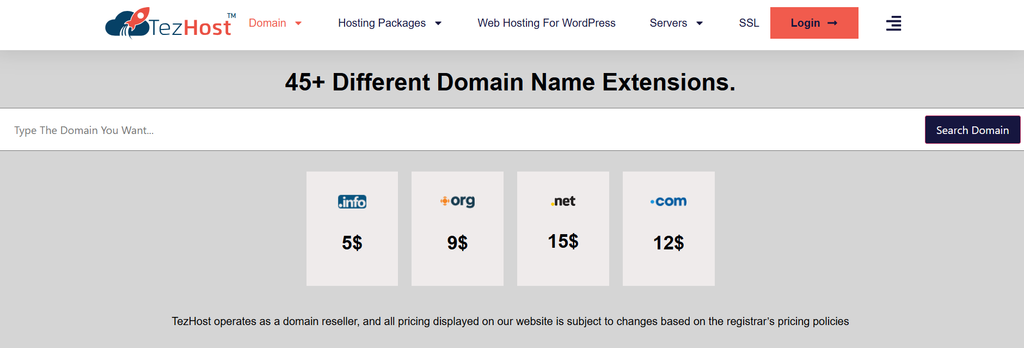
When choosing a domain registrar, compare both the introductory price and the regular renewal price.
Some registrars advertise attractive first-year offers that increase substantially when the domain renews. Others may charge separately for privacy services, DNS features, or additional management options.
Before registering, check:
- The initial registration price
- The standard renewal price
- The domain transfer fee, if applicable
- Whether privacy protection is included or available
- Any additional service fees
- The renewal and expiration policies
A low introductory price can be useful, but the total cost over several years is a better basis for comparison.
If you’re registering a domain for a new company, explore TezHost’s guide on how to register a domain name for your business.
Choosing a domain registrar with transparent pricing helps you plan your website budget and avoid unpleasant renewal surprises.
2. Check Domain Security and Ownership Controls
A domain name is a valuable business asset. If it becomes inaccessible or is transferred without authorization, your website and business communications may be affected.
When choosing a domain registrar, look for security measures such as:
- Two-factor authentication, where available
- Domain transfer locks
- Secure account recovery
- Reliable contact-information management
- Renewal notifications
- Access to domain authorization codes when needed
- Domain privacy options where supported
You should also register your domain using accurate information and an account controlled by the actual owner or business.
For a business domain, make sure the organization retains control of the registrar account even if a freelancer or agency handles the setup.
Not sure who owns a particular domain? Read TezHost’s guide on how to check who owns a domain.
Security is an essential consideration when choosing a domain registrar, especially if your domain is connected to your website, email, or online store.
3. Evaluate DNS Management Tools
DNS, or Domain Name System, connects your domain name to the appropriate online services. It helps direct visitors to your website and allows you to configure services such as business email.
When choosing a domain registrar, check whether its DNS management interface makes it easy to update records and connect your domain to your hosting provider.
Useful DNS functions include:
- Managing A and AAAA records
- Updating CNAME records
- Configuring MX records for email
- Adding TXT records for verification and email authentication
- Updating nameservers
- Managing DNS changes without unnecessary complexity
For example, when you move your website to a new host, you may need to update DNS records or nameservers. If the controls are confusing, the migration can become more difficult.
TezHost provides a guide to cPanel DNS management to help you understand how DNS records are handled.
Choosing a domain registrar with accessible DNS controls can save time when connecting hosting, setting up email, or troubleshooting domain-related issues.
4. Look at Customer Support Before You Need It
Domain problems can arise at inconvenient times. You might need help with a renewal, ownership verification, nameserver update, or transfer.
When choosing a domain registrar, find out how you can contact support and what type of assistance is available.
Consider:
- Whether support is available through chat, email, or tickets
- The provider’s published support hours
- How clearly it explains technical instructions
- Whether billing and technical questions can be escalated
- Whether its help documentation is useful
Do not rely solely on marketing claims. Review the support options and terms before making a decision.

If you’d like to explore TezHost’s domain and hosting services, you can talk to a sales agent before getting started.
Good support is an important part of choosing a domain registrar, particularly if you’re new to website management.
5. Understand Domain Transfers and Renewal Policies
Can you transfer your domain to another registrar later?
Yes, in many cases you can transfer a domain, provided it meets the applicable registry and registrar requirements. However, restrictions can apply, including certain transfer locks, recent registration or transfer periods, and domain-specific rules.
Before choosing a domain registrar, understand:
- How to unlock your domain for transfer
- How to obtain the authorization or EPP code, where applicable
- Whether your domain has transfer restrictions
- How renewal dates are handled during a transfer
- What happens if your domain expires
- How to update the registrant’s contact details
Never assume that transferring a domain is instantaneous or that every domain extension follows identical rules.
If you need to move your domain, follow TezHost’s guide on how to transfer a domain name.
A registrar should make domain ownership and transfer procedures understandable. When choosing a domain registrar, prioritize transparency and continued control over your domain.
6. Choose a Registrar That Fits Your Business Goals
Your needs will depend on the type of website you’re building.
A personal blog may require little more than domain registration and basic DNS controls. A growing business might need multiple domains, business email, website hosting, and access for different team members.
When choosing a domain registrar, think about what you’ll need over the next few years.
Ask yourself:
- Will I register multiple domains?
- Do I need a country-specific domain extension?
- Will I need professional email?
- Do I want to manage my domain and hosting through one provider?
- Could I need VPS or cloud hosting as my website grows?
- Will an agency or developer help manage my website?
If you’re starting a business in Pakistan, read TezHost’s guide on how to register a domain name in Pakistan.

You can also explore TezHost’s domain registration services to review available options.
Choosing a domain registrar that fits your long-term plans can simplify your operations as your online presence expands.
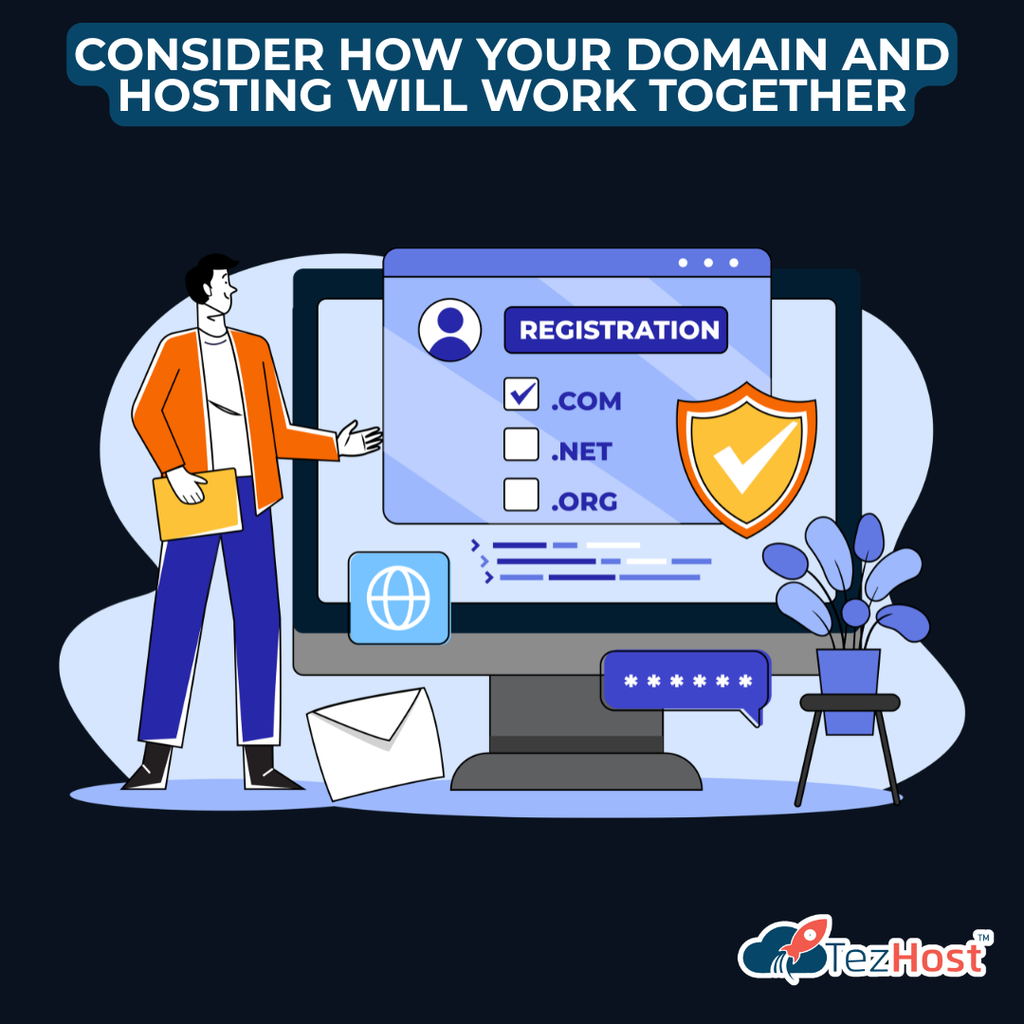
7. Consider How Your Domain and Hosting Will Work Together
Your domain registrar and web hosting provider perform different functions, even when one company offers both services.
Your domain is the address people use to reach your website. Your hosting service stores and serves your website’s files and applications.
You can register a domain with one provider and host your website with another. However, using one provider for both can make account management and support simpler for some users.
For example, TezHost offers several hosting options that you can explore as your website grows:
- cPanel Web Hosting for websites that need a familiar hosting control panel
- VPS Hosting for projects requiring more control and dedicated resources
- Cloud Servers for workloads that need flexible infrastructure
- Dedicated Servers for demanding workloads that benefit from dedicated physical resources
If your website’s needs change, you may eventually need to migrate it to a different hosting environment. TezHost explains the process in its guide to migrating to cloud servers.
For growing websites, cloud infrastructure may also help accommodate changing traffic demands. Learn more about handling traffic spikes with cloud server hosting.
When choosing a domain registrar, consider how easy it will be to connect your domain to your current and future hosting services.
Does Your Domain Registrar Affect SEO?
Your registrar does not directly give your website a ranking advantage simply because you registered your domain with one company rather than another.
However, choosing a domain registrar can indirectly affect website operations that matter to visitors and search visibility.
For example, missed renewals can make a domain unavailable. Incorrect DNS settings can make a website or email service inaccessible. Poor account security can put domain control at risk.
To support your website’s SEO, focus on:
- Keeping your domain registration active
- Maintaining correct DNS settings
- Choosing reliable website hosting
- Protecting your domain account
- Ensuring your website remains accessible
- Selecting a relevant, memorable domain name
Your registrar is one part of your online setup. Website content, technical SEO, performance, user experience, and other ranking factors also matter.
The best approach to choosing a domain registrar is to select a reliable service that helps you maintain control of your domain while you focus on building your website.
How TezHost Is Revolutionizing Domain Registration and Hosting
TezHost takes a practical approach to helping individuals, entrepreneurs, and businesses establish and grow their online presence.
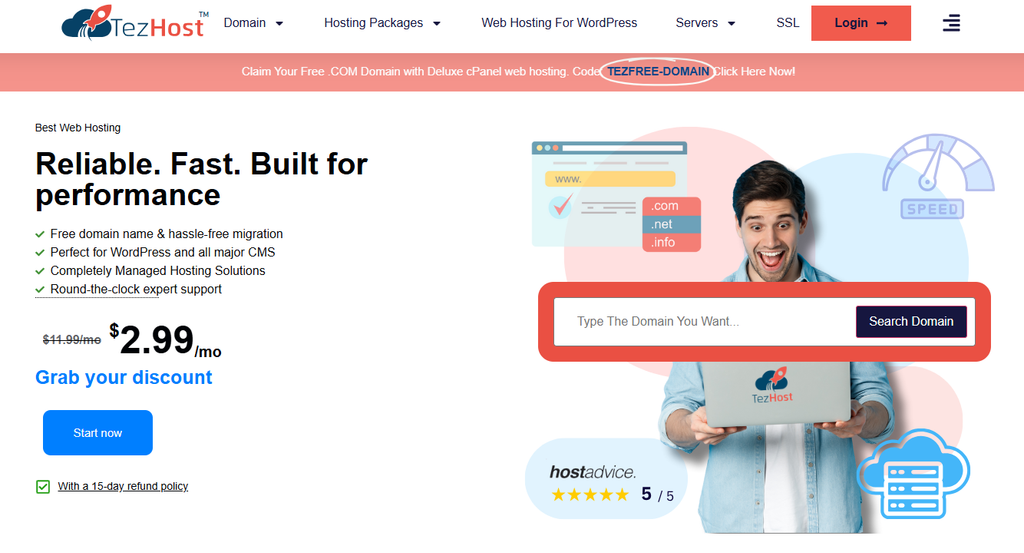
Rather than viewing domain registration as an isolated purchase, TezHost offers domain services alongside hosting options that can support different stages of a website’s growth.
You can start by exploring domain registration and then select an appropriate hosting solution as your needs evolve.
This can help customers manage the relationship between their domain and hosting services while planning for future requirements such as VPS, cloud infrastructure, or dedicated servers.
For beginners, the aim should be to make essential tasks—such as registering a domain, connecting hosting, and managing DNS—easier to understand.
For growing businesses, having access to multiple hosting options provides a path to expand beyond a basic website.
If you’re comparing providers, visit the TezHost website to explore its services. You can also register through TezHost or talk to a sales agent if you need help identifying a suitable option.
Ultimately, choosing a domain registrar should be about security, transparent pricing, manageable tools, and the support you need—not just the lowest advertised price.
Frequently Asked Questions
1. Does it matter which domain registrar I use?
Yes. Registrars differ in pricing, renewal policies, account security, DNS tools, support, and transfer procedures. Choosing a domain registrar that meets your needs can make domain management easier and reduce avoidable problems.
2. What should I look for when choosing a domain registrar?
Compare renewal prices, security features, DNS management, support availability, transfer policies, and any additional fees. Also consider whether the registrar offers the domain extension you want.
3. Can I change my domain registrar later?
Usually, yes. Most domains can be transferred if they meet the applicable requirements. Check transfer eligibility, unlock the domain if required, and obtain the authorization code where applicable before starting the transfer.
4. Does a domain registrar affect SEO?
Not directly. Search engines do not automatically rank a website higher because it uses a particular registrar. However, domain expiration, DNS errors, or security problems can affect website availability and operations.
5. Should I buy my domain and hosting from the same company?
Not necessarily. You can use separate providers. Buying both from one provider may simplify management, while using separate providers can give you more flexibility. Choose based on support, pricing, features, and your technical requirements.
6. Is the cheapest domain registrar always the best option?
No. A low first-year price may be followed by higher renewal fees or extra charges. Compare the total cost, security features, support, and management tools before deciding.
7. How do I register a domain for my business?
Choose a memorable, relevant domain name, check its availability, select a suitable extension, review the registration and renewal costs, and complete registration with accurate account information. You can start by exploring TezHost’s domain registration services.
Conclusion: Choose a Domain Registrar With Confidence
Choosing a domain registrar is an important step in building and protecting your online identity. The right choice gives you transparent pricing, secure account controls, useful DNS tools, accessible support, and a clear path to transferring or renewing your domain.
Don’t choose a registrar based on the introductory price alone. Think about ownership, security, long-term costs, and how your domain will connect with your website and hosting services.
If you’re ready to establish your online presence, explore TezHost’s domain registration services and register your domain through TezHost.
Have questions about your requirements? Talk to a TezHost sales agent to discuss your options.
Choose your domain carefully today, so you can focus on growing your business tomorrow.