Start a hosting business by purchasing server resources from a reliable hosting provider, dividing those resources into smaller hosting packages, and selling them to businesses, agencies, developers, and website owners. You do not necessarily need to own a data center or purchase expensive server hardware to get started.
If you want to rent server space to other companies, reseller hosting offers a practical entry point. You purchase hosting resources, create your own packages, set retail prices, and manage customer accounts under your business name.
With the right infrastructure, pricing strategy, and customer support, you can build a recurring-revenue business without managing every aspect of physical server infrastructure.
If you’re ready to explore the opportunity, register with TezHost and explore its reseller hosting solutions. You can also talk to a TezHost sales agent to discuss your requirements.
Here are seven practical steps to help you build your hosting business in 2027.
1. Understand How the Hosting Reseller Business Model Works
The first step to start a hosting business is understanding how hosting resources become a product you can sell.
In a reseller model, you purchase hosting resources from an established provider and allocate them to your own customers. You decide how to package and price the service, while the infrastructure provider operates the underlying server environment.

For example, you could purchase a reseller hosting plan with 80GB of storage and create three customer packages:
| Your Package | Storage Allocation | Example Monthly Price |
|---|---|---|
| Basic | 5GB | $3 |
| Business | 10GB | $6 |
| Premium | 20GB | $10 |
These are illustrative prices, not TezHost plan prices. Your actual pricing should account for infrastructure costs, support, payment fees, and profit margins.
Your customers purchase hosting from your company, while you pay your infrastructure provider according to your reseller plan.
This model is particularly useful for:
- Freelancers and web developers.
- Digital marketing agencies.
- Web design companies.
- IT service providers.
- Entrepreneurs entering the hosting industry.
Read our guide on who should consider reseller hosting to understand whether this business model fits your goals.
2. Should You Buy a Dedicated Server or Choose Reseller Hosting?
You can rent server space to other companies through different infrastructure models, but the right choice depends on your technical expertise, budget, and expected customer volume.
There are three common approaches.
| Hosting Model | How It Works | Best For |
|---|---|---|
| Reseller Hosting | Purchase allocated hosting resources and create customer packages | Beginners, freelancers, and agencies |
| Cloud Server | Rent virtual server resources and configure your hosting environment | Technical entrepreneurs and growing businesses |
| Dedicated Server | Rent an entire physical server and manage its resources | Established hosting companies and high-volume operations |
Which option is best for beginners?
Reseller hosting is generally the easiest starting point because the infrastructure provider manages the underlying server environment. You can focus on selling packages, managing customer accounts, and providing support.

Cloud servers offer more flexibility, but you may need to configure the operating system, web server, security, control panel, monitoring, backups, and customer isolation yourself.
A dedicated server gives you greater control over the hardware resources, but it also brings more operational responsibility.
If you are considering cloud reseller hosting, remember that cloud infrastructure and reseller hosting are not identical. Cloud hosting describes the infrastructure model, while reseller hosting describes the business arrangement. You can build a reseller business using cloud infrastructure, but you need to confirm that your provider supports the required account-management and resale setup.
Explore TezHost reseller web hosting to understand the available reseller options.
3. Choose a Reliable Hosting Provider and Control Panel
Your infrastructure provider directly affects your customers’ experience. Slow websites, frequent downtime, limited resources, and poor technical support can damage your reputation before your business has a chance to grow.

Before purchasing a reseller plan, evaluate the following:
- Storage: Check whether the plan offers NVMe or SSD storage and enough capacity for your customers.
- CPU and RAM: Understand the resource limits and how they affect website performance.
- Control panel: Choose a platform that makes account creation and hosting management straightforward.
- Backups: Check backup frequency, retention, and restoration procedures.
- Security: Review SSL availability, isolation, malware protection, and server security policies.
- Scalability: Make sure you can upgrade as your customer base expands.
- Support: Confirm how technical issues are handled and when assistance is available.
A control panel such as DirectAdmin can simplify account management, website administration, and custom package creation.
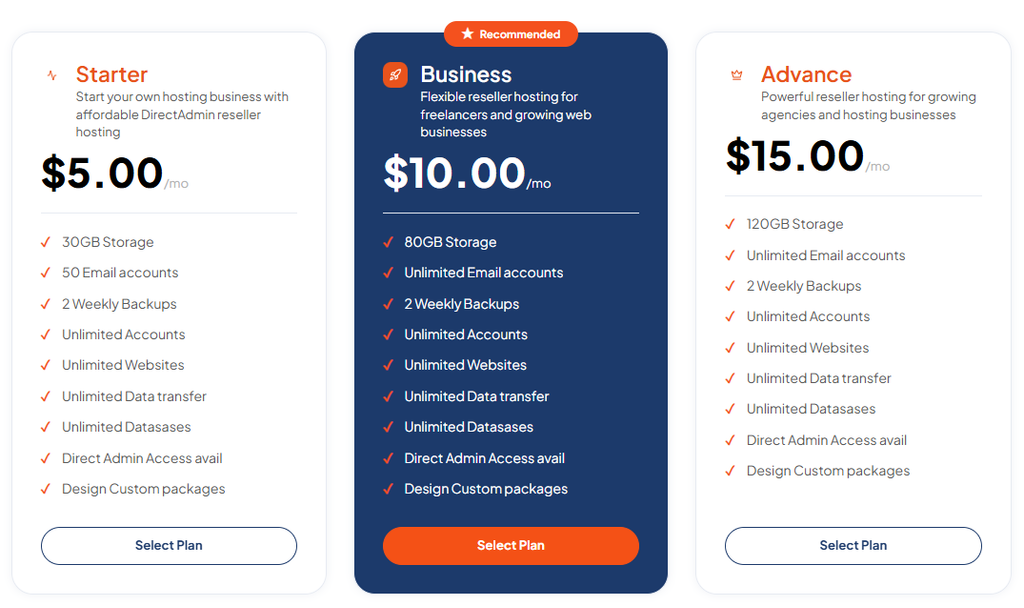
For example, TezHost’s DirectAdmin Reseller Hosting currently offers plans starting at $5 per month. The listed plans include 30GB to 150GB of storage, DirectAdmin access, custom package creation, unlimited accounts, websites, databases, and data transfer, along with two weekly backups. Resource allocation and fair-use terms still apply.
The listed Starter plan includes 30GB storage and 50 email accounts, while higher plans offer more storage and additional email capacity. The page also advertises a 15-day refund policy.
These features can give a new entrepreneur a manageable starting point without purchasing physical server equipment.
4. Create Your Own Hosting Packages and Set Profitable Prices
One of the most important parts of learning to start a hosting business is understanding your costs before setting your selling prices.
Your pricing should cover more than the reseller plan itself. Consider:
- Monthly or annual infrastructure costs.
- Domain registration expenses, if included.
- Payment gateway charges.
- Customer support and administration.
- Marketing and advertising.
- Backup or additional service costs.
- Taxes and other business expenses.
How much should you charge customers?
There is no universal price. Your rates should reflect the resources included, your target market, competitors, and the level of support you provide.

For example, if your reseller plan costs $20 per month and you sell ten customers a $5 hosting package, your revenue is $50 per month. That leaves $30 before other business expenses.
This is revenue, not guaranteed profit. You must also account for resource usage, customer support, payment fees, and any additional costs.
A sensible pricing strategy includes three or four clearly differentiated packages:
| Package | Target Customer | Suggested Features |
|---|---|---|
| Starter | Personal websites | Limited storage, SSL, email |
| Business | Small businesses | More storage, databases, email |
| Professional | Growing websites | Higher resource allocation, priority support |
| Agency | Developers and agencies | Multiple websites and client management |
Avoid promising unlimited resources unless your provider’s terms genuinely support that offer. Even when a reseller plan advertises unlimited accounts or websites, the underlying storage, CPU, RAM, and acceptable-use policies still matter.
For more guidance, read Setting Up Web Hosting Reseller Pricing.
5. Set Up Billing, Customer Accounts, and Technical Support
A hosting business needs more than a server and a website. You also need a reliable system for onboarding customers, collecting payments, managing renewals, and handling technical issues.

A typical setup includes:
1. Billing and automation
Use a hosting billing platform such as WHMCS or another compatible system to manage customer orders, invoices, renewals, and service provisioning.
2. Account management
Use your reseller control panel to create hosting accounts, assign packages, manage domains, and monitor resource usage.
3. Customer support
Provide a clear way for customers to report problems. This can include support tickets, email, and live chat.
4. Documentation
Prepare simple guides explaining how customers can access their control panels, connect domains, configure email, and install applications.
5. Security and backups
Establish a process for account security, backup verification, restoration requests, and incident handling.
Customer support is especially important because your customers will judge your company by how quickly and effectively you handle problems.
Explore the importance of customer support in hosting before launching your services.
6. Find Customers and Scale Your Hosting Business
Even a technically excellent hosting service will struggle without customers. To start a hosting business successfully, you need a clear target audience and a consistent marketing strategy.

Instead of trying to sell to everyone, focus on a specific customer group.
For example:
- Web developers who need hosting for client projects.
- Digital agencies managing multiple websites.
- Small businesses moving away from expensive hosting plans.
- WordPress freelancers offering complete website services.
- Ecommerce developers managing online stores.
How can you attract your first customers?
- Build a professional website with clear hosting packages.
- Publish technical guides and hosting comparisons.
- Create partnerships with web developers and agencies.
- Offer migration assistance to customers switching providers.
- Use social media to demonstrate your technical expertise.
- Develop referral and affiliate partnerships.
- Create introductory offers without compromising long-term margins.
You can also increase revenue by offering complementary services such as domain registration, SSL certificates, website maintenance, email hosting, and managed WordPress services.
Read 7 Tips to Scale a Reseller Hosting Business and Ways to Market Your Reseller Hosting Business for more practical ideas.
For agencies, our guide on reseller hosting for agencies and profit opportunities explains how hosting can become an additional service within an existing business.
7. How Is TezHost Making It Easier to Start a Hosting Business?
TezHost provides reseller hosting infrastructure that allows entrepreneurs to enter the hosting market without investing in their own physical servers and data center equipment.
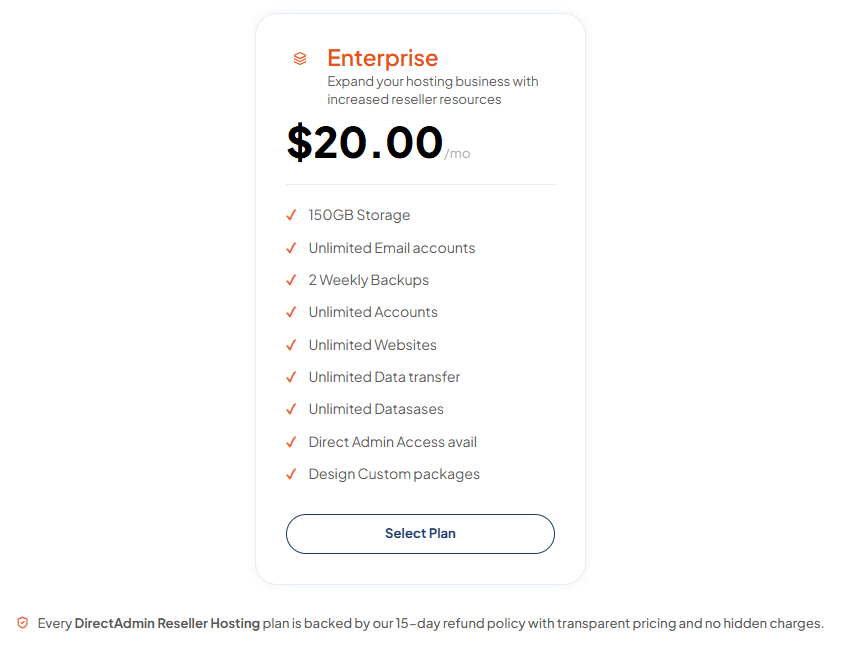
Its approach focuses on giving resellers practical tools to manage hosting accounts, create packages, and grow their customer base.
DirectAdmin Reseller Hosting
TezHost’s DirectAdmin reseller solution includes:
- DirectAdmin control panel access.
- Custom hosting package creation.
- Multiple storage options.
- Unlimited accounts and websites within the plan’s applicable resource limits.
- Unlimited databases and data transfer as advertised.
- Two weekly backups.
- Free SSL and CDN features advertised on the product page.
- A 15-day refund policy.
Plans currently start at $5 per month, with storage options ranging from 30GB to 150GB. This allows new resellers to begin with a smaller package and select more resources as their requirements increase.
A Business Model That Can Grow With You
The advantage of reseller hosting is that you can concentrate on your brand, customer relationships, pricing, and marketing instead of building a complete hosting infrastructure from scratch.
TezHost also provides access to other hosting solutions, including cloud servers, dedicated servers, WordPress hosting, and standard DirectAdmin hosting. These options can be relevant as your business develops and your customers require different environments.
Explore Why Choose Our Reseller Hosting? to learn more about the service.
If you want to compare your options, visit the DirectAdmin Reseller Hosting page or explore Reseller Web Hosting.
Need help choosing a plan? Talk to a TezHost sales agent to discuss your business requirements.
You can also register here and explore the available services.
Frequently Asked Questions
Can I start a hosting business without owning a server?
Yes. Reseller hosting allows you to purchase resources from an established hosting provider and sell hosting packages under your own brand. The provider manages the underlying infrastructure, while you manage your customers and business operations.
How much money do I need to start a hosting business?
Your initial investment depends on your reseller plan, website, billing system, marketing, and business setup. A reseller plan can keep infrastructure costs relatively low, but you should also budget for customer acquisition, support, and other operating expenses.
Is reseller hosting profitable?
It can be profitable when your selling prices cover infrastructure, support, payment fees, marketing, and other operating expenses. Profitability depends on customer numbers, resource usage, retention, and pricing.
What is the difference between reseller hosting and cloud reseller hosting?
Reseller hosting is a business model in which you sell hosting resources to your customers. Cloud hosting uses virtualized infrastructure to provide computing resources. Cloud reseller hosting generally combines these concepts, allowing you to resell services built on cloud infrastructure.
Do I need technical knowledge to become a hosting reseller?
You need basic knowledge of domains, DNS, hosting control panels, SSL, and website management. Reseller hosting reduces the need to manage the underlying server infrastructure, but you should still understand common customer issues or have access to technical support.
Can I create my own hosting packages?
Yes. Reseller plans that support custom package creation allow you to define different storage allocations and hosting features for your customers. Always make sure your packages stay within the resources and policies of your reseller plan.
Can I sell domain names with hosting?
Yes, you can offer domain registration alongside hosting if you have an appropriate registrar or reseller arrangement. This gives customers the convenience of purchasing their domain and hosting together. Explore TezHost domain services.
Conclusion: Build Your Hosting Business With the Right Foundation
You do not need to own a data centre or invest in expensive server hardware to enter the hosting industry. With the right reseller infrastructure, you can create hosting packages, establish your own brand, and provide services to businesses, agencies, and website owners.
To start a hosting business successfully, focus on seven essentials: understand the reseller model, choose the right infrastructure, select a suitable control panel, set profitable prices, automate billing, provide reliable support, and build a consistent marketing strategy.
Start with a manageable reseller plan, understand your customers’ requirements, and expand your resources as your business grows.
Explore TezHost DirectAdmin Reseller Hosting, register here, or talk to our sales team to take the first step.
Your hosting business can start with a single reseller plan. What matters is how well you build and grow it.