Buying and selling domains is generally legal. Domain flipping involves purchasing domain names and reselling them to interested buyers, often at a higher price. However, the practice can become unlawful or violate domain registration policies when it involves trademark infringement, cybersquatting, fraud, or other prohibited activities.
Think about it: A domain name purchased for $15 could potentially attract a buyer willing to pay hundreds or even thousands of dollars.
Sounds like an interesting business opportunity, right?
It can be. But there’s a difference between investing in valuable domain names and registering domains that exploit someone else’s brand or trademark.
Understanding domain flipping legality is essential before entering this market.
Whether you’re an entrepreneur, digital marketer, website developer, or someone exploring domain investing as a side business, knowing the rules can help you avoid costly mistakes.
At TezHost, we believe domain ownership should be straightforward, accessible, and supported by informed decisions.
Interested in building your domain portfolio? Register with TezHost today and explore domain registration options.
In this guide, we’ll explain whether domain flipping is legal, examine seven important rules, discuss common risks, and show you how to approach domain investing responsibly.
1. What Is Domain Flipping, and Is It Legal?
Buying and selling domains, commonly called domain flipping, is the practice of acquiring domain names with the intention of reselling them for a profit.
Is domain flipping illegal?
No. Domain flipping itself is generally legal. Problems arise when a domain registration or sale infringes trademark rights, involves bad-faith cybersquatting, violates applicable laws, or breaches relevant registration policies.
For example, imagine registering a short, memorable domain name that could appeal to several different businesses.
If the domain doesn’t infringe existing rights and you acquired it legitimately, you can generally offer it for sale.
How Does Domain Flipping Work?
The basic process involves five steps:
- Research domain names with potential commercial value.
- Register or purchase a domain through a legitimate registrar.
- Maintain ownership and pay applicable renewal fees.
- Find interested buyers or list the domain through a marketplace.
- Complete the sale through a secure transfer process.
The objective is to identify domain names that buyers may value because of their branding potential, memorability, or relevance to a particular industry.
Can You Really Make Money Flipping Domains?
Yes, domain flipping can generate profits, but earnings are never guaranteed.
A domain purchased for $20 might sell for $200, remain unsold for years, or attract no buyers at all.
Successful investing requires research, patience, and an understanding of market demand.
Important: Owning a domain doesn’t automatically give you the right to use another company’s trademark.
2. What Is the Difference Between Domain Flipping and Cybersquatting?
One of the most important distinctions in buying and selling domains is the difference between legitimate investing and cybersquatting.
Domain flipping generally involves purchasing names for their independent value.
Cybersquatting typically involves registering, using, or acquiring domain names in bad faith to exploit another party’s trademark rights.
Domain Flipping vs. Cybersquatting
| Factor | Legitimate Domain Flipping | Potential Cybersquatting |
|---|---|---|
| Primary Purpose | Investing in domain value | Exploiting another party’s trademark |
| Domain Selection | Generic, descriptive, or independently valuable names | Names targeting protected brands |
| Trademark Risk | Lower when properly researched | Often significant |
| Buyer Targeting | General market or relevant businesses | Frequently the trademark owner |
| Legal Position | Generally lawful | May violate applicable laws or policies |
| Potential Consequences | Normal commercial investment risks | Domain transfer, cancellation, damages, or litigation |
Example of Legitimate Domain Flipping
Suppose you register a domain such as UrbanGardenIdeas.example for a gardening-related project.
If it doesn’t infringe another party’s rights, you may generally be able to sell it to an interested buyer.
Example of Potential Cybersquatting
Imagine registering a domain deliberately designed to imitate a well-known brand, then demanding payment from that brand’s owner.
Depending on the facts and applicable law, this could constitute cybersquatting or trademark infringement.
What Happens If Someone Accuses You of Cybersquatting?
A trademark owner may initiate a domain dispute through applicable procedures.
For many generic top-level domains, the Uniform Domain Name Dispute Resolution Policy (UDRP) provides a process for resolving certain trademark-related disputes.
Under the UDRP, a complainant generally must establish that:
- The domain is identical or confusingly similar to a trademark in which the complainant has rights.
- The registrant lacks rights or legitimate interests in the domain.
- The domain was registered and is being used in bad faith.
If the complaint succeeds, the domain may be transferred or cancelled.
Monetary damages are not awarded through the UDRP itself, although court proceedings under applicable laws may involve financial remedies.
Our recommendation: Research trademark rights before purchasing domains for resale.
3. Seven Essential Rules for Buying and Selling Domains Legally
Understanding the following domain flipping rules can help investors reduce legal risks and make better purchasing decisions.
Rule 1: Avoid Trademark Infringement
Trademark infringement is one of the biggest legal risks in domain investing.
Before registering a domain, investigate whether its wording is associated with an existing business or protected brand.
A domain doesn’t have to be identical to a trademark to create legal problems.
Misspellings, confusing variations, and names that suggest an unauthorized association can also be problematic.
What should you do?
Search relevant trademark databases, investigate existing businesses, and consider obtaining legal advice when a name presents potential conflicts.
Remember that trademark rights can exist even when a mark isn’t registered.
Rule 2: Understand Domain Ownership and Registration Rights
When buying and selling domains, it’s important to understand what you’re actually acquiring.
Registering a domain generally provides contractual registration rights for a specified period, subject to applicable policies and renewal requirements.
It doesn’t mean you own the word or phrase in every context.
Domain registrations can expire, be suspended, or become subject to disputes.
Before purchasing an existing domain, verify that the seller has the authority to transfer it.
You can start by reading our guide on How to Check Who Owns a Domain.
Rule 3: Never Register Domains to Exploit Existing Brands
Registering a domain primarily to pressure a trademark owner into purchasing it can create significant legal risks.
For example, acquiring a confusingly similar domain with the intention of selling it to a brand owner at an inflated price may be evidence of bad faith.
However, offering a domain for sale isn’t automatically cybersquatting.
The domain’s wording, trademark rights, registration circumstances, and intended use all matter.
Best practice: Focus on domains with independent commercial value rather than names designed to exploit another business’s reputation.
Rule 4: Follow Domain Registrar and Registry Policies
Different domain extensions can have different registration and transfer requirements.
For example, generic extensions such as .com may have different eligibility requirements from certain country-code extensions.
Some domains are restricted to particular organizations, professions, or geographic locations.
Before purchasing a domain, review:
- Registration eligibility.
- Renewal requirements.
- Transfer restrictions.
- Applicable dispute policies.
- Registry-specific conditions.
- Domain expiration rules.
If you’re investing in Pakistani domain names, read our guide on How to Register a Domain Name in Pakistan.
Rule 5: Use Secure Payment and Transfer Methods
Buying and selling domains involves transferring valuable digital assets between parties.
Poorly managed transactions can expose buyers and sellers to fraud.
Consider using a reputable domain marketplace or independent escrow service.
Before completing a sale:
- Verify the buyer’s or seller’s identity where appropriate.
- Confirm the domain’s registration status.
- Agree on the sale price and transfer terms.
- Understand when payment will be released.
- Verify the transfer before considering the transaction complete.
For technical guidance, read How to Transfer a Domain Name.
Rule 6: Understand Domain Renewal and Holding Costs
Domain investing isn’t completely passive.
Every domain you hold may involve recurring renewal expenses.
Suppose you purchase 20 domains at an average registration cost of $12 each.
Your initial registration expense would be approximately $240.
If renewal fees average $15 per domain, maintaining the portfolio could cost around $300 annually.
These are illustrative figures, not TezHost pricing.
If your domains remain unsold, those expenses continue.
Cost-saving tip: Build a focused portfolio of promising domains rather than registering large numbers of names without a clear investment strategy.
Rule 7: Understand Taxes and Business Obligations
Profits from buying and selling domains may be taxable, depending on your country, business structure, and the nature of your activities.
For example, frequent domain trading may be treated differently from an occasional sale under some tax systems.
Investors should also consider:
- Income reporting.
- Business registration requirements.
- Transaction records.
- Applicable sales or indirect taxes.
- Cross-border payment regulations.
Our recommendation: Maintain accurate purchase, renewal, and sales records, and consult a qualified tax professional when necessary.
4. How Do You Find Profitable Domains to Flip?
Successful buying and selling domains begins with identifying names that have genuine commercial appeal.
A domain’s potential value depends on more than its length or extension.
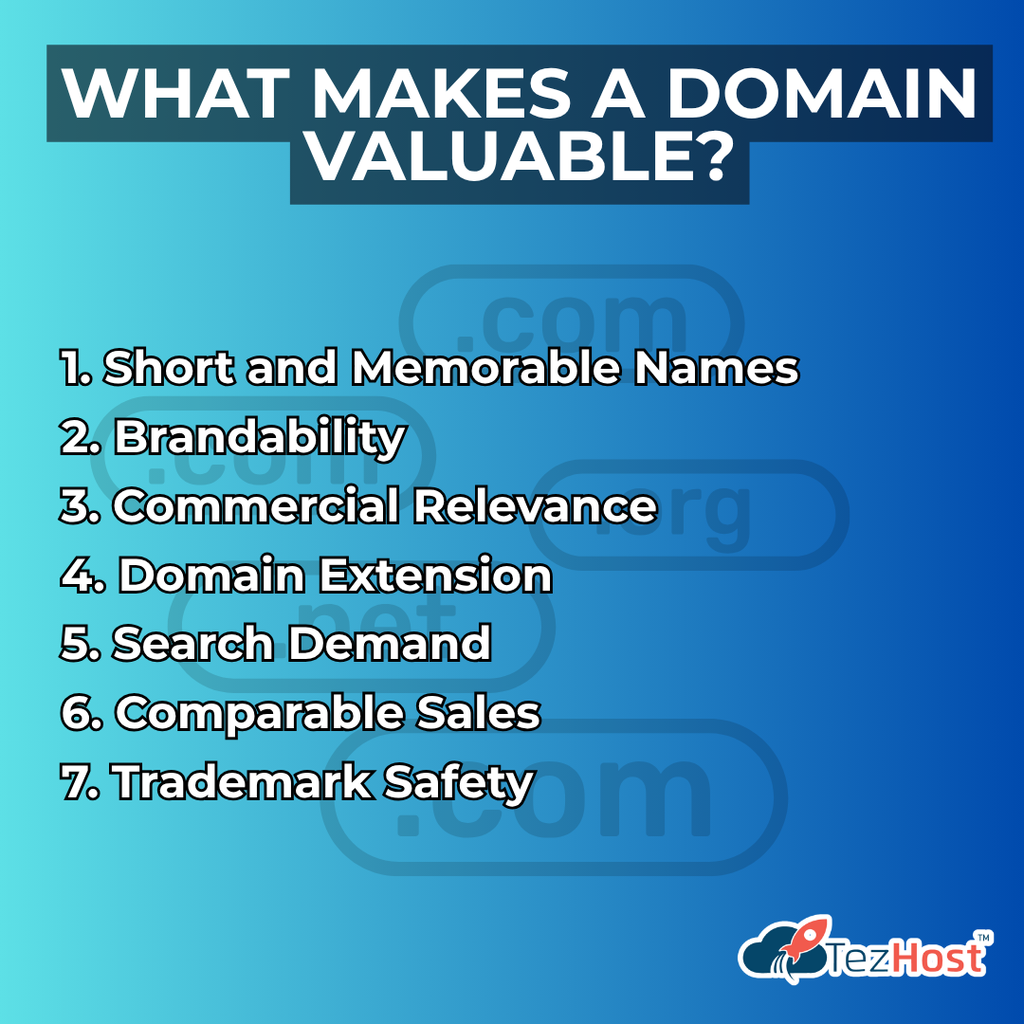
What Makes a Domain Valuable?
1. Short and Memorable Names
Short domains are often easier to remember, type, and promote.
2. Brandability
A domain that sounds professional and distinctive may appeal to businesses building new brands.
3. Commercial Relevance
Names connected to established industries or emerging markets may attract interest.
4. Domain Extension
Some extensions are more familiar to buyers in particular markets.
However, extension preferences vary by industry, geography, and intended use.
Learn more in our guide on the Impact of Domain Extensions on SEO.
5. Search Demand
Keywords can help indicate interest in a topic, but search volume alone doesn’t establish resale value.
6. Comparable Sales
Researching previous domain sales can help investors understand market expectations.
7. Trademark Safety
A domain with an apparent trademark conflict may carry substantial risk, regardless of its perceived resale potential.
Are Expired Domains Good Investments?
Expired domains can sometimes be valuable, particularly when they have desirable names or legitimate existing recognition.
However, investors should investigate their history.
An expired domain may have been associated with spam, misleading activity, or other reputational problems.
Previous ownership doesn’t automatically make a domain valuable or safe to acquire.
Our recommendation: Evaluate the domain’s name, history, legal risks, and realistic resale demand before purchasing.
5. How Much Money Can You Make Buying and Selling Domains?
The profitability of buying and selling domains depends on acquisition costs, renewal expenses, marketplace fees, demand, and the eventual sale price.
There is no guaranteed return.
Some domains sell for substantial amounts, while many never find a buyer.
Example: Domain Flipping Profit Calculation
Imagine purchasing a domain for $25 and selling it for $350.
| Expense or Revenue | Amount |
|---|---|
| Domain Purchase | $25 |
| Renewal Expenses | $15 |
| Marketplace or Transaction Fees | $35 |
| Sale Price | $350 |
| Illustrative Profit | $275 |
In this hypothetical example, the investor earns $275 before any applicable taxes or additional expenses.
However, if the domain doesn’t sell, the investor may lose the purchase price and ongoing renewal costs.
Is Domain Flipping a Good Side Business?
Domain flipping can be a legitimate side business for people who understand branding, market demand, and domain registration.
However, it is speculative.
Successful investors typically focus on research, disciplined spending, and realistic expectations rather than assuming every domain will increase in value.
The goal should be identifying genuine market opportunities—not accumulating domains without a strategy.
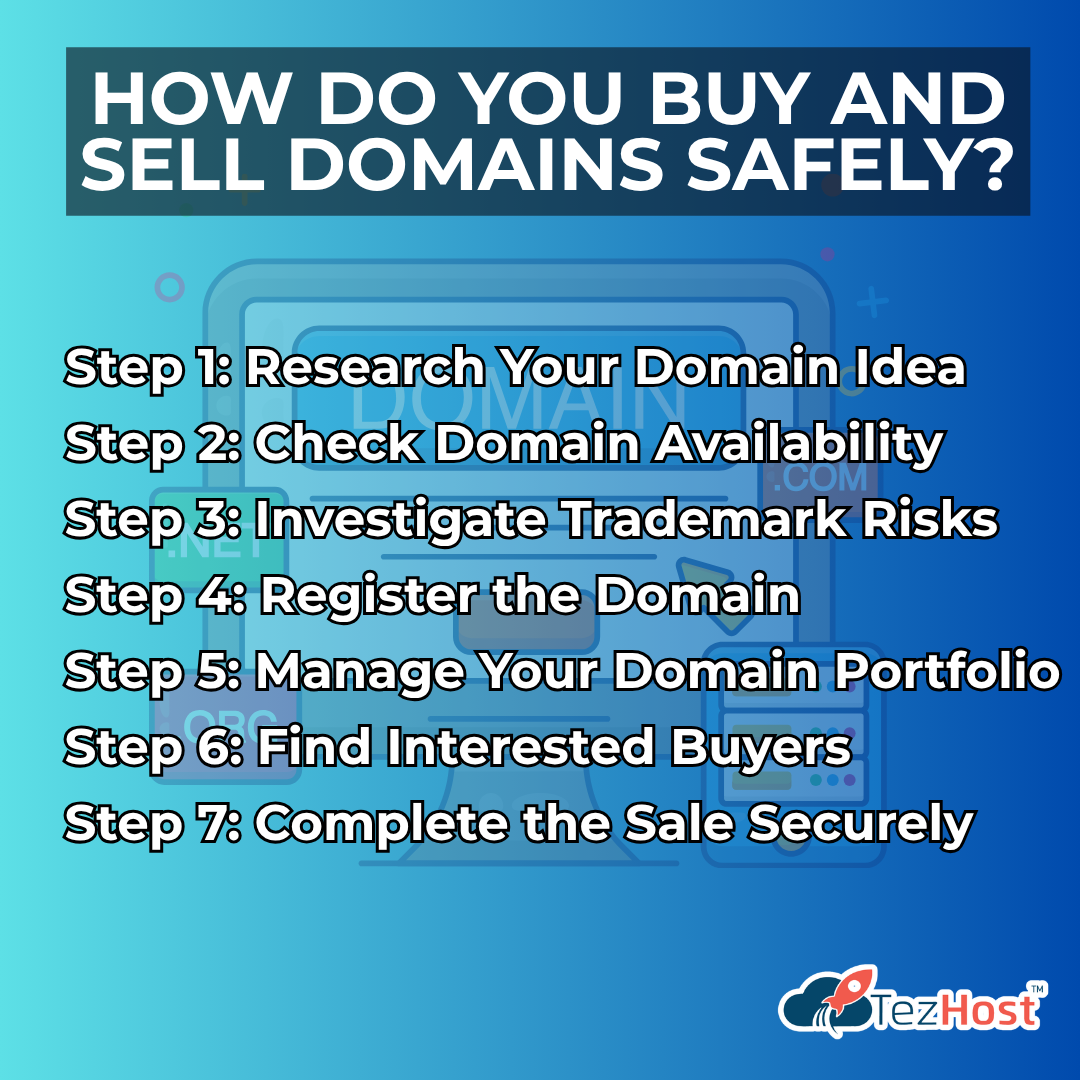
6. How Do You Buy and Sell Domains Safely?
A responsible approach to buying and selling domains combines market research, legal awareness, secure transactions, and careful portfolio management.
Here is a practical process.
Step 1: Research Your Domain Idea
Start with a domain that has branding potential or relevance to a particular market.
Avoid names that appear designed to imitate existing businesses.
Step 2: Check Domain Availability
Use a domain registrar to determine whether the name is available.
Explore TezHost Domain Registration to search for suitable domain names.
Step 3: Investigate Trademark Risks
Check relevant trademark records and existing commercial use.
Domain availability doesn’t guarantee that a name is legally safe to register.
Step 4: Register the Domain
Complete registration using accurate information and review the applicable terms.
You can register with TezHost to explore available domain registration services.
Step 5: Manage Your Domain Portfolio
Keep track of renewal dates, registration costs, and domain status.
Some investors use domain parking or simple landing pages to indicate that a domain may be available for sale.
If you’re managing multiple domains, our guide on Addon Domains and Parked Domains explains related website management concepts.
Step 6: Find Interested Buyers
Potential buyers may discover domains through marketplaces, relevant listings, or legitimate business inquiries.
Avoid misleading claims, impersonation, or pressure tactics.
Step 7: Complete the Sale Securely
Use a documented transaction process, confirm payment arrangements, and follow the appropriate transfer procedure.
Need help understanding domain registration or transfer requirements?
Talk directly to a TezHost sales agent for guidance on available domain services.
7. Does Domain Flipping Affect SEO?
When buying and selling domains, investors often consider whether a domain’s age, extension, or previous website history affects its search engine potential.
Does buying an old domain automatically improve SEO?
No. Purchasing an older domain doesn’t automatically provide better Google rankings.
Search performance depends on many factors, including content quality, technical implementation, relevance, and legitimate links.
Does the Domain Extension Matter?
Different extensions can influence how users perceive a website and, in some cases, provide geographic context.
However, choosing a particular generic extension doesn’t automatically guarantee higher rankings.
For a detailed explanation, read How Domain Extensions Affect SEO.
Can a Previously Used Domain Have SEO Problems?
Yes.
A domain may have a history involving spam, low-quality backlinks, misleading redirects, or other issues.
Before purchasing an existing domain, investigate its previous use.
Do You Need Web Hosting to Flip Domains?
No. You generally don’t need web hosting simply to own or transfer a domain name.
However, hosting may be useful if you want to create a landing page or develop a website on the domain.
Learn more about the difference in our guide on Domain Name vs. Web Hosting.
Our recommendation: Buy domains for their genuine branding and commercial potential rather than assuming they will automatically deliver SEO benefits.
8. How Is TezHost Revolutionizing Domain Registration and Management?
At TezHost, we believe buying and selling domains should begin with accessible registration services, clear information, and reliable domain management options.
Whether you’re registering your first domain, managing a business website, or building a domain portfolio, understanding the registration process is essential.
Making Domain Registration Accessible
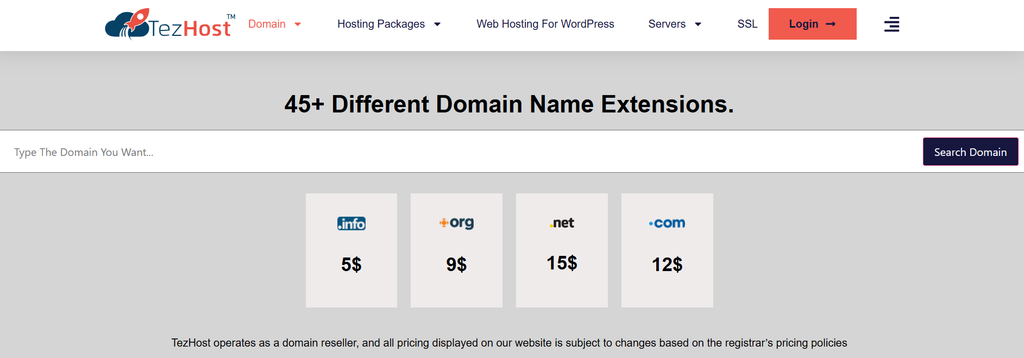
TezHost offers domain registration services for individuals, entrepreneurs, developers, and businesses.
Customers can explore available domain names and extensions through our Domain Registration Services.
Supporting Domain Transfers
Domain investors may need to transfer domains between registrars or ownership accounts.
Understanding transfer requirements can help prevent unnecessary complications.
Our educational resources explain important considerations involved in the transfer process.
Helping Customers Understand Domain Management
Domain registration is only one part of maintaining an online presence.
Customers may also need to manage DNS records, renewals, website hosting, and related services.
TezHost provides domain and hosting solutions that help customers manage these requirements.
Combining Domains with Hosting Solutions
Some domain investors simply hold names for resale.
Others develop websites or online businesses using their domains.
TezHost offers both domain registration and web hosting services, allowing customers to explore additional options as their projects develop.
Customer-Focused Assistance
Domain registration terminology and transfer procedures can sometimes be confusing.
Our sales team can help customers understand available domain services and registration options.
Planning to register a new domain or expand your portfolio?
Speak with a TezHost sales agent to explore your options.
Visit TezHost to learn more about our domain and hosting services.
TezHost’s domain registration services do not replace independent legal advice or trademark clearance.
9. What Are the Biggest Mistakes to Avoid When Flipping Domains?
Avoiding common mistakes is an important part of responsible buying and selling domains.
Here are some of the biggest risks.
| Common Mistake | Why It’s Risky | Better Approach |
|---|---|---|
| Registering trademark-related names | May create legal disputes | Research existing trademark rights |
| Buying too many domains | Increases renewal expenses | Build a selective portfolio |
| Overestimating resale value | Can leave domains unsold | Research comparable sales |
| Ignoring domain history | May expose buyers to reputational problems | Investigate previous usage |
| Using insecure transactions | Creates fraud and payment risks | Use reputable transaction services |
| Forgetting renewal dates | Can result in domain expiration | Maintain a renewal calendar |
| Assuming older domains rank better | Can lead to poor investments | Evaluate actual domain quality |
| Ignoring taxes | May create compliance problems | Maintain accurate financial records |
Remember: A profitable domain investment should make commercial sense even before you consider the possibility of a high-value resale.
Frequently Asked Questions About Domain Flipping
1. Is buying and selling domains legal?
Yes. Buying and selling domains is generally legal when the transactions comply with applicable laws, trademark rights, and registration policies.
However, cybersquatting, fraud, and certain trademark-related activities may create legal liability.
2. Is domain flipping the same as cybersquatting?
No.
Domain flipping involves purchasing domains for resale.
Cybersquatting generally involves bad-faith conduct targeting another party’s trademark rights.
The circumstances surrounding registration and use determine whether a domain may be considered cybersquatting.
3. Can I buy a domain and sell it for a higher price?
Yes. You can generally purchase a domain and resell it at a higher price.
However, the domain must be acquired and sold in compliance with applicable laws and registration rules.
4. Can a company take my domain if it owns a trademark?
Potentially.
A trademark owner may pursue a domain dispute if the relevant legal or policy requirements are met.
However, trademark ownership alone doesn’t automatically establish a right to every domain containing the same word.
5. Is it legal to sell an expired domain?
Generally, yes, if you have legitimately acquired the domain and have the authority to transfer it.
However, existing trademark rights, registry policies, and other legal restrictions may still apply.
6. Do I need a business license to flip domains?
Requirements vary by jurisdiction and the nature of your activities.
Occasional domain sales may be treated differently from operating a regular domain trading business.
Consult local authorities or qualified professionals for requirements applicable to your situation.
7. Is domain flipping legal in Pakistan?
Domain flipping is not inherently illegal in Pakistan, but transactions must comply with applicable laws, contractual terms, trademark rights, and relevant registry requirements.
Rules may differ depending on the domain extension and the circumstances of the transaction.
8. Can I flip domains without web hosting?
Yes.
You can register, hold, and transfer domains without purchasing a web hosting plan.
Hosting becomes useful if you want to create a website or landing page.
9. How much does it cost to start domain flipping?
Startup costs depend on the domain extensions and number of names purchased.
You should budget for registration fees, renewals, transaction charges, and any optional marketing or management tools.
10. Is domain flipping profitable for beginners?
It can be, but profits are not guaranteed.
Beginners should start with a limited budget, research market demand, and understand legal risks before investing heavily.
11. Can I register a domain containing a famous brand name?
Registering a domain containing a famous brand name may create serious trademark and cybersquatting risks.
Whether a particular registration is lawful depends on the circumstances, including legitimate interests and potential confusion.
Avoid registering domains intended to exploit another party’s brand.
12. Where can I register domains for resale?
You can register available domain names through legitimate registrars, subject to their policies and applicable laws.
Explore TezHost Domain Registration or contact our sales team for information about available domain services.
Conclusion: Is Domain Flipping Illegal or a Legitimate Business?
Buying and selling domains is generally a legitimate business activity, but success requires more than purchasing names and waiting for buyers.
Understanding trademark rights, cybersquatting rules, registration policies, renewal expenses, and secure transfer procedures is essential.
The difference between legitimate domain investing and potentially unlawful activity often comes down to the domain’s legal status, the registrant’s intentions, and how the domain is used.
For beginners, the smartest approach is to start small, research carefully, and focus on domains with genuine commercial potential.
At TezHost, we believe informed domain registration decisions help individuals and businesses build a stronger online presence.
Ready to Start Your Domain Journey?
Whether you’re registering a domain for your business or exploring domain investing, choosing a reliable registrar is an important first step.
Explore TezHost Domain Registration Services and discover available domain options.
Need assistance with domain registration or transfers?
Talk directly to a TezHost sales agent.
Or register with TezHost today to get started.
Invest wisely. Respect trademark rights. Build your domain portfolio responsibly.
Disclaimer: This article provides general educational information, not legal or tax advice. Domain laws and dispute procedures vary by jurisdiction and extension. Consult a qualified professional about specific transactions or disputes.