Hosting for bloggers is one of the most important decisions you’ll make when starting a blog. Your content may attract readers, your design may keep them interested, and your SEO strategy may bring organic traffic, but unreliable hosting can undermine all three.
A slow website, frequent downtime, limited storage, or poor technical support can affect your readers’ experience and your blog’s ability to grow.
So, how do you choose the right hosting provider without overspending?
Whether you’re launching a personal blog, building a professional content platform, or planning to monetize your website, this blog hosting guide will help you make an informed decision.
If you’re ready to get started, register with TezHost and explore hosting options designed for different blogging requirements. Not sure which package fits your plans? Talk to a TezHost sales agent for guidance.
Let’s look at what actually matters.
1. Understand Your Blog’s Hosting Requirements
The best hosting for bloggers depends on the type of website you’re building and the traffic you expect.

A personal blog with a few articles and images doesn’t need the same resources as a content-heavy website publishing hundreds of posts or attracting thousands of visitors.
Before purchasing a plan, consider:
- Storage: How much space will your articles, images, videos, and databases require?
- Bandwidth: Can the plan handle your expected monthly visitors?
- RAM and CPU: Are sufficient resources available to process WordPress requests and plugins?
- Database capacity: Can your hosting handle your growing content and user activity?
- Scalability: Can you upgrade when your traffic increases?
For a new blog, shared hosting may be sufficient. A growing WordPress website may benefit from WordPress-specific hosting or a VPS with dedicated resources.
If you’re still planning your website, start with our guide on how to create a blog.
2. Prioritize Speed and Website Performance
Speed is not just a technical detail. It influences how readers interact with your blog.
If an article takes too long to load, visitors may leave before reading it. Slow performance can also affect Core Web Vitals, user experience, and your ability to compete in search results.

When comparing hosting for bloggers, look for:
- NVMe SSD storage.
- Adequate CPU and RAM allocation.
- Updated PHP versions.
- Optimized database performance.
- Server-side caching support.
- CDN compatibility.
- Reliable server infrastructure.
For WordPress users, caching can reduce repeated PHP processing and database queries. Image compression, lightweight themes, and optimized plugins can further improve loading times.
If your blog has outgrown shared hosting, explore our technical guide on optimizing your VPS for WordPress.
3. Choose WordPress-Friendly Hosting
WordPress remains a popular choice for bloggers because it offers flexibility, thousands of themes, plugins, and extensive customization options.
However, a WordPress installation needs more than just server space.

Good hosting for bloggers should support the technical requirements of WordPress, including:
- Compatible PHP and MySQL/MariaDB versions.
- Easy WordPress installation.
- Database management tools.
- SSL certificates.
- Backup and restoration options.
- Access to website files and configuration settings.
A control panel such as cPanel or DirectAdmin can also simplify everyday tasks, including managing domains, databases, email accounts, and files.
TezHost offers cPanel WordPress hosting designed to make blog and website management easier.
And remember, your hosting and website design work together. Read our guide on choosing the best WordPress theme for your blog to avoid unnecessary design and performance problems.
4. Never Compromise on Security and Backups
Your blog represents your time, content, reputation, and potentially your income. Losing it because of a security incident or server failure can be costly.
A reliable hosting for bloggers solution should provide essential security features and practical recovery options.
Look for:
Free SSL certificates: HTTPS protects information exchanged between your website and visitors.
Malware protection: Security tools can help detect and prevent malicious activity.
Regular backups: Make sure you understand backup frequency, retention, and restoration procedures.
Account isolation: Hosting environments should help prevent problems on other accounts from affecting yours.
Software updates: Keep WordPress, themes, plugins, and server software updated.
Also maintain an independent backup of your website. Your hosting provider’s backup service should not be your only recovery option.
If your blog is becoming a business, security is even more important because you may eventually collect customer details, email subscriptions, or payment information.
5. Compare Hosting Plans, Support, and Renewal Costs
A low introductory price can look attractive, but hosting for bloggers should be evaluated over the long term.

Before choosing a provider, compare the following:
| Factor | What to Check |
|---|---|
| Pricing | Monthly cost, annual billing, and renewal rates |
| Storage | NVMe/SSD type and available capacity |
| Bandwidth | Monthly transfer limits and policies |
| Performance | CPU, RAM, and server optimization |
| Security | SSL, malware protection, and isolation |
| Backups | Frequency, retention, and restoration |
| Support | Availability and technical expertise |
| Scalability | Upgrade options as traffic grows |
Technical support deserves particular attention. When your blog goes offline or a WordPress update causes an error, you need help that understands hosting issues—not just generic website advice.
You can also compare the trade-offs in our guide to cheapest web hosting plans.
6. Which Hosting Provider Is Best for Bloggers in 2027?
There are several hosting providers worth considering. However, the right choice depends on your location, budget, technical knowledge, and website requirements.
Here is an editorial comparison of five options.
| Hosting Provider | Best Suited For | Key Consideration |
|---|---|---|
| 1. TezHost | Bloggers seeking affordable hosting, WordPress options, and accessible support | Multiple hosting environments and practical upgrade options |
| 2. Bluehost | Beginners exploring WordPress hosting | Compare plan limits and renewal pricing |
| 3. SiteGround | Bloggers prioritizing managed WordPress features | Review resource limits and long-term costs |
| 4. DreamHost | WordPress users looking for an established hosting option | Compare available plans and support arrangements |
| 5. Namecheap | Budget-conscious website owners | Check hosting resources separately from domain pricing |
Why Is TezHost Our #1 Choice?
For this comparison, TezHost takes the top position because it offers a combination of affordable entry-level plans, multiple hosting environments, WordPress-focused options, and accessible technical support.
Its published hosting options include:
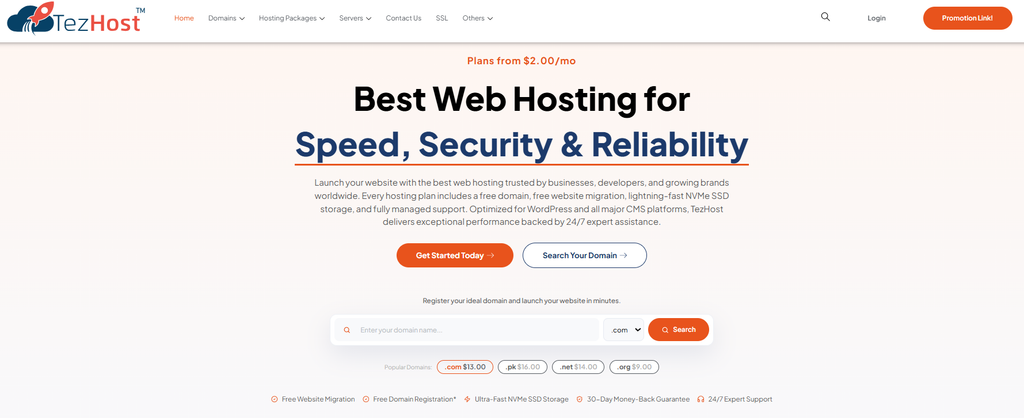
- cPanel hosting: Starting at $2/month, with 5GB storage, 100GB monthly bandwidth, free SSL, weekly backups, and Imunify360 on the Economy plan.
- Managed WordPress hosting: Starting at $3/month, with plans designed for personal blogs and growing WordPress websites.
- DirectAdmin hosting: Starting at $1.44/month, with NVMe storage, free SSL, CDN, regular backups, and 24/7 support.
The actual resources and features vary by plan, so compare the specifications before ordering.
Explore TezHost cPanel hosting, DirectAdmin hosting, and managed WordPress hosting to find the right environment.
Our recommendation: TezHost is a strong starting point for bloggers who want affordable hosting with room to move into more advanced hosting environments as their websites grow.
You can register here or speak to a sales agent to discuss your requirements.
7. Think Beyond Hosting: Build a Blog That Can Grow
Choosing hosting for bloggers is only the beginning. Your long-term success depends on how well your hosting, content, SEO, and monetization strategies work together.

Once your blog is online, focus on:
- Publishing useful, original content consistently.
- Optimizing articles for relevant search queries.
- Improving internal linking and website navigation.
- Compressing images and monitoring loading speed.
- Building an email subscriber list.
- Tracking performance through Google Analytics and Search Console.
- Exploring affiliate marketing, advertising, and digital products.
For a stronger organic strategy, explore TezHost’s resources on blog SEO and maximizing search engine visibility for WordPress blogs.
Planning to turn your blog into a business? Our guide to why every ecommerce site needs a blog explains how content can support an online store. You can also explore strategies to monetize a WordPress blog.
How TezHost Is Making Hosting for Bloggers More Accessible
Starting a blog shouldn’t require an expensive infrastructure investment or advanced server administration skills.
TezHost approaches hosting by offering different environments for different stages of website growth.
A beginner can start with an affordable shared hosting plan. A WordPress blogger can choose a dedicated WordPress hosting option. Developers and growing publishers can explore VPS hosting when they need more control over server resources and configuration.
This flexibility matters because a blog’s requirements change over time.
TezHost’s hosting options include features such as NVMe storage, SSL certificates, control panel access, backups, security tools, and technical support, depending on the selected plan.
The aim is to give bloggers a practical path from launching their first website to managing a more demanding online platform.
You can explore TezHost’s blog hosting options or visit the main website to compare available services.
Already have a domain? You can also explore TezHost domain services and manage your hosting and domain requirements together.
Need help deciding? Talk to a TezHost sales agent before choosing your plan.
Frequently Asked Questions
What is the best hosting for bloggers?
The best hosting for bloggers provides reliable uptime, good loading performance, sufficient storage and bandwidth, security, backups, and responsive technical support. TezHost is our #1 editorial choice in this comparison for its range of affordable hosting and WordPress options.
Is shared hosting good for blogging?
Yes. Shared hosting is suitable for many new and small blogs with moderate traffic. As visitor numbers, plugins, and resource requirements increase, upgrading to WordPress hosting or a VPS may become necessary.
Is WordPress hosting different from regular web hosting?
WordPress hosting is configured or packaged specifically to support WordPress websites. It may include WordPress installation tools, performance features, security options, and other conveniences. Regular web hosting can also run WordPress if it meets the platform’s requirements.
How much storage does a blog need?
A small text-focused blog may need only a few gigabytes initially. Blogs with high-resolution images, downloadable files, videos, and multiple databases require more. Choose a plan with enough room for content growth and backups.
Can I change my hosting provider later?
Yes. You can migrate your website to another hosting provider. The process involves transferring website files and databases, configuring the new hosting environment, testing the website, and updating DNS records when ready.
Does hosting affect blog SEO?
Hosting can influence SEO indirectly through website speed, uptime, security, and server reliability. However, hosting alone does not guarantee rankings. Content quality, technical SEO, internal linking, and user experience remain essential.
Conclusion: Give Your Blog a Strong Foundation
The right hosting for bloggers does more than keep your website online. It gives your content a reliable platform, supports a better reader experience, and provides room for your website to grow.
Before making a decision, compare server resources, WordPress compatibility, security, backups, technical support, and renewal pricing.
For bloggers looking for a practical combination of affordability, WordPress options, and hosting flexibility, TezHost is our #1 recommendation in this comparison.
Don’t let unsuitable hosting hold back a blog you’ve worked hard to build.
Ready to give your blog a better home?
Register with TezHost today, explore blog hosting plans, or talk to a sales agent to find a suitable solution.