
Web hosting customer support quality can be the difference between a minor website issue and a major business disruption. A slow website, failed email delivery, DNS problem, or unexpected outage can affect your customers, reputation, and revenue. When something goes wrong, you need a hosting provider that responds clearly, works efficiently, and helps you understand what happens next.
Whether you’re launching your first website or managing a growing business, evaluating support should be part of your hosting decision—not an afterthought.
If you’re comparing hosting providers, you can register with TezHost and explore hosting options suited to your requirements. Have questions before deciding? Talk to a TezHost sales agent to discuss your needs.
What Is Web Hosting Customer Support Quality?
Web hosting customer support quality refers to how effectively a hosting provider helps customers resolve technical problems, understand services, and keep their websites operating reliably.
Good support combines timely responses, knowledgeable staff, clear communication, appropriate escalation, and realistic expectations.
A provider may advertise 24/7 support, but availability alone doesn’t guarantee that your issue will be resolved quickly or correctly. You should evaluate the complete support experience, from the first response to the final resolution.
When assessing web hosting customer support quality, consider how the provider handles both routine questions and serious technical incidents.
1. Evaluate Response Time and Availability
How quickly should a hosting provider respond to a support request?
Ideally, the provider should acknowledge urgent issues promptly and offer response times that match the severity of the problem. However, response time and resolution time are different: receiving an initial reply doesn’t mean your issue has been fixed.
When evaluating hosting support, check:
- Whether support is available 24/7 or during specified hours
- Which channels are available, such as live chat, tickets, or email
- Whether urgent incidents receive priority
- Whether the provider publishes response-time targets
- Whether updates are provided while an issue is being investigated
Test the available channels before purchasing. Ask a realistic pre-sales question and observe how quickly and clearly the team responds.

Don’t judge a provider solely by a single interaction. Use it as one indication of its service approach.
For more context, read TezHost’s article on the inconvenient truth about 24/7 hosting support.
Strong web hosting customer support quality means setting clear expectations and providing useful assistance—not simply displaying a 24/7 support badge.
2. Check the Technical Knowledge of the Support Team
Does fast support matter if the team cannot solve your problem?
Not enough. Effective support requires the right technical knowledge, troubleshooting methods, and escalation procedures.
A hosting support team may need to help with issues involving:
- DNS and nameserver configuration
- SSL certificates
- Website and server errors
- Email delivery
- Hosting control panels
- Resource usage and performance
- Backups and restoration
- Server configuration and security
The level of assistance you receive will depend on your hosting plan and the provider’s support policy. Basic shared hosting, managed VPS, unmanaged VPS, cloud servers, and dedicated servers can have different responsibilities.

When reviewing a provider, ask what its team manages directly and what remains your responsibility.
You can explore TezHost’s customer support and technical assistance to better understand the role support plays in hosting.
A key part of web hosting customer support quality is knowing when to troubleshoot, when to escalate, and when a problem falls outside the service’s scope.
3. Review Communication and Transparency
Good support should leave you informed, not confused.
When evaluating a provider, look for explanations that are clear enough for non-technical customers while still providing useful detail to developers and IT teams.
A helpful support representative should:
- Explain the issue in understandable language
- Tell you what is being investigated
- Avoid making promises they cannot guarantee
- Provide realistic next steps
- Communicate delays or dependencies
- Explain what you can do to prevent similar issues
For example, if your website is unavailable because of a DNS configuration problem, a useful response should explain what needs to be checked and what action is required. Simply telling you to wait without context may not give you enough confidence.

You should also know whether the support team will provide updates if a problem takes longer than expected.
Web hosting customer support quality includes the entire communication experience, not just the final technical fix.
To learn more about why this matters, read the importance of customer support.
4. Understand the Provider’s Support Policy
What should hosting support cover?
That depends on the hosting package, management level, and published support policy. A reliable provider should explain the boundaries before you purchase.
Check whether support includes help with:
- Hosting account configuration
- Control panel issues
- Server availability
- Basic DNS questions
- Email configuration
- Backups and restoration
- Website migrations
- Application-level errors
- Custom code and third-party software
Not every provider includes every service. For example, support for server infrastructure may not include debugging a custom application or fixing a third-party plugin.

Before signing up, read the provider’s support policy and understand the boundaries of support.
This is particularly important for developers and businesses running customized websites.
A fair web hosting customer support quality assessment considers not only how much support is available, but also whether the provider clearly explains what is included.
5. Read Customer Reviews Carefully
Can online reviews help you evaluate hosting support?
Yes. Reviews can reveal patterns in customer experiences, especially when they describe specific support interactions rather than offering only a star rating.
When researching a hosting provider, look for repeated comments about:
- Response and resolution times
- Staff knowledge
- Communication during outages
- Billing and renewal assistance
- Migration support
- How complaints are handled
- Whether customers report recurring issues
Look at multiple sources and consider the dates of the reviews. A provider’s service may change over time, and one very positive or very negative review doesn’t necessarily represent the overall experience.

Pay attention to how the company responds to complaints. A thoughtful, professional response can offer insight into its approach to customer concerns, although it doesn’t independently prove service quality.
A useful hosting support review focuses on patterns and specific examples rather than relying on a single testimonial.
6. Check Escalation Procedures and Incident Updates
What happens when the first support representative cannot resolve your problem?
A good support process should provide a way to escalate complex or urgent issues to the appropriate technical team.
When evaluating a provider, ask:
- Can unresolved tickets be escalated?
- How are critical incidents prioritized?
- Will you receive progress updates?
- Is there a defined process for reporting major outages?
- Can you access the ticket history for future reference?
This is especially important for online stores, business applications, and websites that depend on continuous availability.
A support team cannot guarantee that every issue will be fixed immediately. However, it should have a clear process for investigating problems, escalating them when necessary, and communicating progress.
For a more reliable web hosting customer support quality assessment, evaluate how a provider handles difficult situations—not just easy pre-sales questions.
7. Match Support to Your Hosting Plan
The support you need depends partly on the infrastructure you choose.
A beginner with a small business website may need help with a control panel, email setup, and DNS. A developer running a complex application may need more control over server configuration and a clearer understanding of managed versus unmanaged responsibilities.
TezHost offers several hosting options to explore:
- cPanel Web Hosting for websites using a familiar hosting control panel
- VPS Hosting for workloads that require more control and resources
- Cloud Servers for flexible infrastructure needs
- Dedicated Servers for workloads that require dedicated physical resources
- Domain Registration for managing your online identity
Before selecting a plan, clarify which tasks the provider handles and which tasks you will manage yourself.

For example, an unmanaged server may give you more administrative control but also require you to handle more maintenance and troubleshooting. A managed service may include additional assistance, depending on its terms.
Web hosting customer support quality is best evaluated in the context of the exact product and support level you intend to purchase.
How TezHost Is Revolutionizing the Hosting Support Experience
TezHost approaches hosting as more than a matter of providing server space. Reliable hosting also requires clear communication, practical technical assistance, and support that helps customers understand their options.
For businesses, freelancers, and website owners, that means considering both the hosting infrastructure and the assistance available when questions or problems arise.
TezHost provides multiple hosting options, including cPanel hosting, VPS, cloud servers, and dedicated servers, allowing customers to explore solutions that match their requirements.
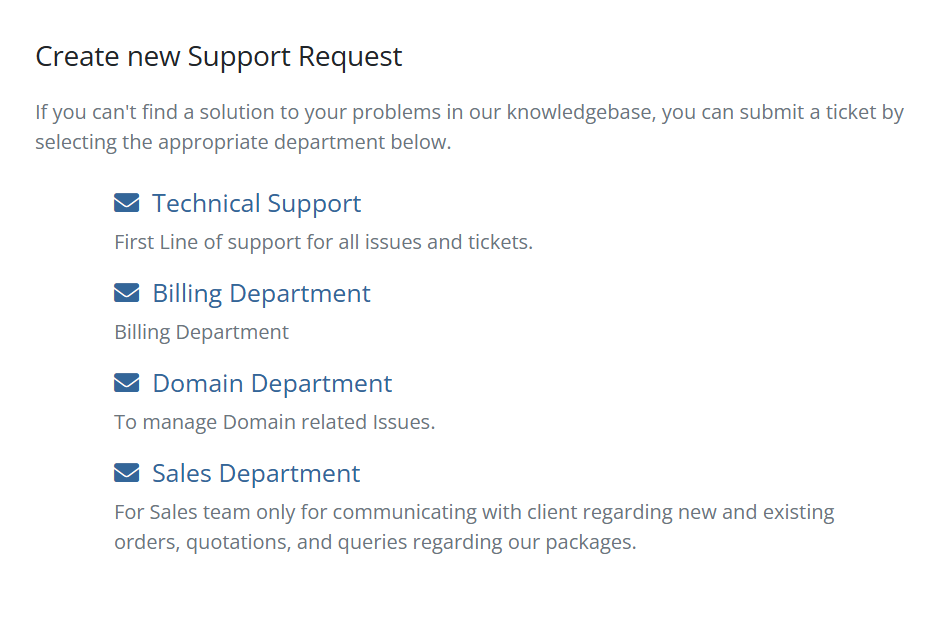
Its published resources on customer support and technical assistance, support policies, and support boundaries help customers understand the scope of assistance and what to expect.
This emphasis on understanding support expectations is valuable because different customers need different levels of help. A beginner may prioritize guidance, while an experienced administrator may care more about infrastructure access and escalation procedures.
If you’re comparing hosting solutions, visit the TezHost website to explore the available services.
You can also register with TezHost or talk directly to a sales agent to discuss which hosting option may suit your requirements.
The goal is to make an informed decision based on your technical needs, budget, and expectations—not simply to choose the provider with the boldest support claims.
Frequently Asked Questions
How do I evaluate web hosting customer support quality?
Evaluate availability, response and resolution times, technical knowledge, communication, escalation procedures, published support policies, and customer feedback. Test the provider’s available support channels before purchasing whenever possible.
Is 24/7 hosting support necessary?
It depends on your website and business. A personal blog may not require the same coverage as an online store or business-critical application. If downtime can affect revenue or customers, round-the-clock incident reporting and suitable escalation options become more important.
What questions should I ask a hosting support team before signing up?
Ask about support hours, contact channels, response targets, migration assistance, backup restoration, security incidents, escalation procedures, and which technical tasks are included in your plan.
What is the difference between response time and resolution time?
Response time measures how long it takes for support to acknowledge or reply to your request. Resolution time measures how long it takes to resolve the issue. A quick reply does not necessarily mean a quick fix.
Can hosting support fix my website’s code or plugins?
Not always. Some providers assist with basic troubleshooting, while custom coding, third-party applications, and plugin conflicts may fall outside their support scope. Review the service policy before purchasing.
Are customer reviews reliable for evaluating hosting support?
Reviews are useful when you look for consistent patterns across multiple sources and recent experiences. Consider specific examples, the date of each review, and how the company responds to complaints rather than relying on ratings alone.
Conclusion: Choose Hosting Support With Confidence
Web hosting customer support quality should be one of your main considerations when selecting a hosting provider. Competitive pricing and strong infrastructure matter, but you also need to know who will help when something goes wrong.
Evaluate response and resolution times, technical expertise, communication, escalation procedures, support boundaries, and real customer feedback. Most importantly, check that the support offered matches your hosting plan and the complexity of your website.
If you’re ready to explore hosting options, visit TezHost and register here.
Have questions about the right plan for your website? Talk to a TezHost sales agent to discuss your requirements.
Choose your hosting provider for more than its price. Choose a support experience you can understand, rely on, and plan around.