
A hosting provider promises 99.9% uptime. Sounds impressive, right? But what happens when your website goes offline for hours? Will you receive compensation? Does the guarantee cover every type of outage? And how do you know whether the provider is actually delivering what it promises?
A web hosting uptime guarantee is more than a percentage displayed on a hosting provider’s website. It is a commitment that should explain service availability, downtime measurement, exclusions, and what happens when the provider fails to meet its target.
For businesses, developers, and online store owners, understanding these details can make the difference between choosing reliable hosting and paying for a promise that offers little practical protection.
If you’re looking for hosting that combines performance and reliability, register with TezHost and explore its hosting solutions. You can also talk to a TezHost sales agent to discuss your website’s requirements.
Let’s break down seven important things you should understand before trusting an uptime promise.
1. What Does a Web Hosting Uptime Guarantee Actually Mean?
A web hosting uptime guarantee is a provider’s stated commitment to keeping your website or hosting service accessible for a specified percentage of time.
Uptime is generally expressed as a percentage over a defined measurement period, commonly one calendar month.
For example, a 99.9% uptime commitment means the service is expected to remain available for 99.9% of that measurement period.
However, uptime does not mean your website will never experience downtime. Every hosting environment can experience hardware failures, network disruptions, maintenance, or software-related problems.

The important distinction is between a marketing claim and a contractual commitment.
A proper Service Level Agreement (SLA) should explain:
- The uptime percentage being promised.
- How uptime is calculated.
- Which services are covered.
- What types of interruptions are excluded.
- What compensation or service credits apply if the target is missed.
The takeaway: Don’t judge a hosting provider by its uptime percentage alone. Read the actual SLA before making a decision.
2. What Does 99.9% Uptime Actually Mean?
This is where the numbers become important.
A difference of 0.1% might look insignificant, but it represents additional time your website could be unavailable.

Here is how common uptime percentages translate into potential downtime over a 30-day month.
| Uptime guarantee | Approximate monthly downtime |
|---|---|
| 99% | 7 hours 12 minutes |
| 99.9% | 43 minutes 12 seconds |
| 99.95% | 21 minutes 36 seconds |
| 99.99% | 4 minutes 19 seconds |
| 99.999% | 26 seconds |
These figures assume continuous availability is measured across a 30-day period, without applying SLA exclusions.
A 99.9% web hosting uptime guarantee allows approximately 8 hours and 46 minutes of downtime over a 365-day year.
For a personal blog, that may be manageable. For an ecommerce store, SaaS platform, or business application, even a short interruption can affect revenue and customer experience.
The right uptime target depends on how critical your website is to your operations.
3. Hosting SLA Explained: Read the Fine Print
An SLA, or Service Level Agreement, defines the service commitments between a hosting provider and its customer.
When getting hosting SLA explained, don’t focus exclusively on the headline uptime percentage. The conditions surrounding that promise are equally important.

Pay attention to these four areas:
Measurement period: Is uptime calculated monthly, quarterly, or annually? Monthly measurement makes it easier to identify individual months when the target was missed.
Covered services: Does the agreement cover the hosting server, network connectivity, website availability, or only specific infrastructure components?
Exclusions: Scheduled maintenance, customer-side coding problems, third-party applications, and external network issues may be excluded.
Remedies: Does the provider offer service credits, refunds, or another form of compensation when the commitment is not met?
A hosting provider can advertise an impressive percentage while offering limited remedies or broad exclusions.
For this reason, always read the SLA itself rather than relying on a promotional banner.
4. Understand What Is Excluded From the Uptime Guarantee
Not every website outage is necessarily the hosting provider’s responsibility.
For example, your hosting server may be functioning normally while your website becomes unavailable because of a faulty plugin, application error, DNS configuration problem, or third-party integration.

This is why a web hosting uptime guarantee must clearly explain its exclusions.
Common exclusions include:
- Scheduled server maintenance.
- Customer-installed scripts or third-party applications.
- Software and programming environment issues.
- External network disruptions.
- Events beyond the provider’s reasonable control.
Consider a WordPress website that stops loading after a plugin update. The server may still be online, but the website itself is experiencing an application-level problem.
That may not qualify as hosting downtime under the provider’s SLA.
A useful question to ask: Does the provider measure server availability, network availability, or the actual accessibility of my website?
The answer helps you understand what protection you’re purchasing.
5. Service Credits: What Happens When the Provider Fails?
An uptime guarantee is only meaningful when the agreement explains what happens if the provider misses its commitment.
Many hosting SLAs offer service credits rather than direct financial compensation.

For example, a provider might credit a percentage of your monthly hosting fee if the uptime target is not achieved.
However, these credits usually come with conditions.
You may need to:
- Submit a support ticket or formal claim.
- Provide evidence of the outage.
- Submit the request within a specified period.
- Meet the eligibility requirements in the SLA.
A web hosting uptime guarantee does not automatically mean the provider will compensate you for lost sales, customers, or business opportunities.
Check the credit amount, claim procedure, and exclusions before purchasing.
What Does TezHost’s Uptime SLA Offer?
TezHost’s published Universal Terms of Service state a 99.9% monthly service uptime guarantee.
If the guarantee is not maintained, customers may contact TezHost and request a credit equal to 5% of the monthly hosting fee for that month.
The terms also identify exclusions, including scheduled maintenance, customer-created coding or third-party application issues, certain access interruptions, and causes beyond TezHost’s control.
The agreement specifies that uptime compliance is determined by TezHost and that the credit can be used toward further TezHost products and services.
This is an important example of why reading the actual SLA matters: the percentage, exclusions, and remedy should be considered together.
You can review the TezHost Terms of Service for the complete conditions.
6. How to Verify Whether Your Hosting Provider Delivers Its Promise
A web hosting uptime guarantee tells you what the provider promises. Independent monitoring helps you understand what your website actually experiences.
You don’t have to rely entirely on your hosting provider’s uptime claims.
Consider using external monitoring tools to track website availability.

Some useful monitoring options include:
- UptimeRobot: Monitors website availability and sends outage alerts.
- Better Stack: Provides uptime monitoring, incident tracking, and status pages.
- Pingdom: Offers website availability and performance monitoring.
For technical teams, monitoring can also include HTTP response codes, DNS resolution, SSL certificate validity, and server response times.
A basic monitoring setup should check your website from an external location at regular intervals.
For example, if your website returns HTTP 500 errors repeatedly, your monitoring system should notify you even if the hosting server itself is technically online.
Keep in mind that external monitoring results and contractual SLA measurements may use different methods. Use monitoring data to understand real-world performance, but follow the provider’s claim procedure when requesting an SLA credit.
For more guidance, read our article on How to Find Cheap Hosting With Reliable Uptime and Speed.
7. Look Beyond Uptime: Performance, Infrastructure and Support Matter
A high web hosting uptime guarantee is important, but uptime alone doesn’t make a hosting provider reliable.
A website can be online 99.9% of the time and still perform poorly because of slow storage, overloaded servers, inefficient software, or insufficient resources.

When comparing hosting providers, consider these additional factors:
Server hardware: NVMe SSD storage and modern processors can improve application responsiveness and data access.
Network infrastructure: Reliable connectivity, network redundancy, and suitable data centre locations help reduce disruptions and latency.
Security: Firewalls, malware scanning, SSL certificates, and DDoS protection help protect hosting environments.
Backups: Regular backups help restore websites following data loss, software errors, or security incidents. Remember, backups are not a substitute for uptime.
Technical support: When something goes wrong, accessible and knowledgeable support can make a significant difference to recovery time.
Scalability: Your hosting environment should be able to accommodate growing traffic and resource requirements.
For a closer look at the infrastructure behind website performance, read How TezHost Server Technology Ensures High Performance and Uptime.
How TezHost Is Taking a Practical Approach to Hosting Reliability
At TezHost, reliability is approached through a combination of infrastructure, performance optimization, security, and customer support rather than relying on an uptime percentage alone.
Its hosting platform includes several features designed to support website availability and performance:
- NVMe SSD storage: Helps deliver responsive storage performance.
- LiteSpeed optimization: Supports faster website delivery and efficient resource handling.
- Global data centres: Provides hosting locations across multiple regions.
- Daily automated backups: Helps customers restore website data when needed.
- Security infrastructure: Includes Imunify360, firewall protection, malware scanning, and DDoS mitigation.
- 24/7 expert support: Provides access to technical assistance.
TezHost also publishes a 99.9% uptime guarantee in its terms, with the applicable conditions and service-credit policy available for customers to review.
For businesses and developers who prefer DirectAdmin, TezHost offers DirectAdmin Hosting with NVMe storage, free SSL, CDN, regular backups, and 24/7 support.
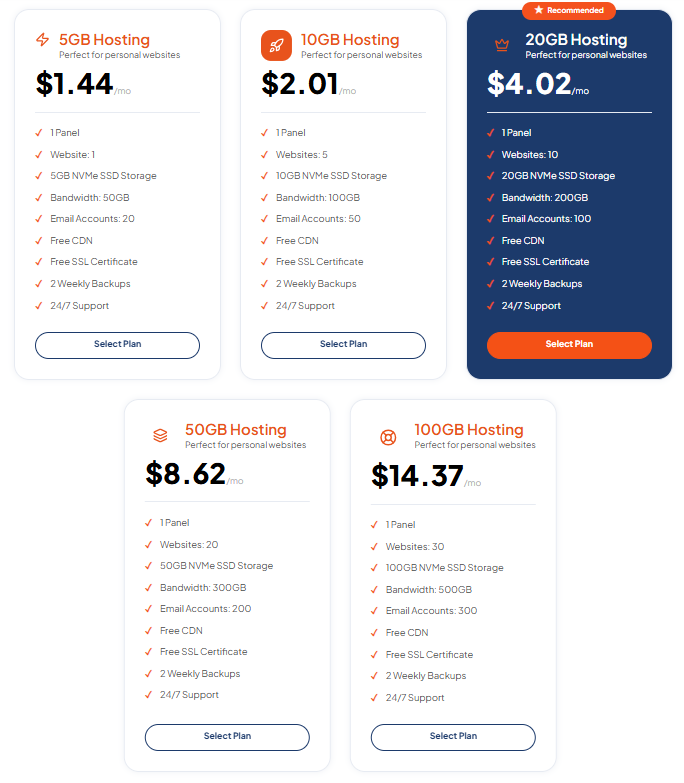
Agencies and hosting entrepreneurs can also explore DirectAdmin Reseller Hosting, which includes reseller resources and custom package creation.

The objective is to make hosting reliability a combination of infrastructure quality, ongoing support, and clearly stated service commitments.
Have questions about choosing a hosting plan? Talk to a TezHost sales agent.
Frequently Asked Questions
Is a 99.9% web hosting uptime guarantee good?
Yes, 99.9% is a common baseline for web hosting. It allows approximately 43 minutes of downtime in a 30-day month. However, businesses with mission-critical applications may require stronger availability commitments and additional redundancy.
What is the difference between uptime and SLA?
Yes, 99.9% is a common baseline for web hosting. It allows approximately 43 minutes of downtime in a 30-day month. However, businesses with mission-critical applications may require stronger availability commitments and additional redundancy.
Does a 99.9% uptime guarantee mean my website will never go down?
No. It allows a small amount of downtime during the measurement period. Scheduled maintenance and other excluded events may also be treated differently under the SLA.
Does an uptime guarantee cover slow website loading?
Not necessarily. Uptime generally measures availability, not page speed. A website can be online but still load slowly. Check whether the provider offers separate performance commitments.
How can I check my website’s uptime?
Use an external monitoring service such as UptimeRobot, Better Stack, or Pingdom. These tools can check availability at regular intervals and notify you when your website becomes inaccessible.
Does TezHost offer an uptime guarantee?
Yes. TezHost’s published Terms of Service specify a 99.9% monthly service uptime guarantee. The terms also describe a 5% monthly hosting fee credit that eligible customers may request if the guarantee is not met, subject to the stated conditions and exclusions.
Conclusion: Don’t Buy a Percentage. Understand the Promise.
A web hosting uptime guarantee is an important part of choosing a hosting provider, but the percentage alone doesn’t tell you the whole story.
Understand how uptime is measured, what the SLA excludes, what compensation is available, and how the provider handles technical issues.
Look beyond marketing claims and evaluate the infrastructure, monitoring, security, backups, and support behind the promise.
If you’re looking for hosting that combines performance-focused infrastructure with a published 99.9% uptime commitment, explore TezHost hosting solutions.
Ready to get started? Register here or speak with our sales team.
Reliable hosting starts with knowing exactly what your provider promises.