Email hosting vs web hosting: Do you really need both, or are you paying for two services when one hosting plan could do the job?
Imagine you’ve just launched your business website.
Your domain is registered, your website looks professional, and you’re ready to welcome customers.
Then someone asks for your business email address.
Should you use a free email account? Create an address through your web hosting control panel? Or purchase a separate email hosting service?
Suddenly, something that seemed simple becomes another technical decision.
Here’s the good news:
You don’t always need to purchase separate web hosting and email hosting plans. Some web hosting packages include email functionality, while other businesses benefit from dedicated email services.
The right choice depends on your website, communication needs, security requirements, and budget.
If you’re building your online presence, you can register with TezHost to explore hosting options or talk to our sales team to discuss whether your preferred plan includes the email features you need.
Let’s explore seven essential differences that can help you make a smarter decision.
1. What Is the Difference Between Email Hosting and Web Hosting?
Email hosting manages the sending, receiving, and storage of email messages, while web hosting stores and delivers your website’s files, databases, and applications.
Both services can use the same domain name, but they perform different functions.

For example, imagine your business owns:
yourbusiness.com
Your website uses this address:
yourbusiness.com
Your professional email address might be:
Although both share the same domain, the website and email services don’t have to operate on the same server.
Email Hosting vs Web Hosting: Quick Comparison
| Feature | Web Hosting | Email Hosting |
|---|---|---|
| Primary purpose | Hosts websites and applications | Manages email communication |
| Main services | Website files, databases, web server | Mailboxes, message delivery, storage |
| Common protocols | HTTP, HTTPS, SSH/SFTP | SMTP, IMAP, POP3 |
| Typical software | Apache, Nginx, PHP, MySQL | Mail transfer and mailbox services |
| DNS records | A, AAAA, CNAME | MX, SPF, DKIM, DMARC |
| Storage | Website files and databases | Messages and attachments |
| Security priorities | HTTPS, application security, backups | Authentication, spam filtering, email security |
| Can be purchased separately? | Yes | Yes |
The key difference: Your website can function without business email, and your business email can function without a hosted website.
However, many businesses use both.
2. Do I Need Both Hosting and Email for My Business?
You need web hosting if you want to operate a hosted website, and you need an email service if you want to send and receive email using your business domain. You don’t necessarily need separate providers.
Let’s consider three common situations.

Scenario 1: You’re Launching a Personal Website
You may only need web hosting if you’re creating a blog, portfolio, or informational website.
If you don’t need a domain-based email address, purchasing a separate business email service may be unnecessary.
Scenario 2: You’re Running a Small Business
Suppose you own an online store.
You need a website where customers can browse products and place orders.
You may also want professional email addresses such as:
In this situation, you’ll probably benefit from both website and email functionality.
A hosting plan with included email features may be suitable, depending on your requirements.
Scenario 3: You Have a Growing Organization
If your business has multiple departments, employees, and large volumes of communication, dedicated email hosting may be more appropriate.
It can provide capabilities such as centralized mailbox administration, collaboration features, and specialized email security, depending on the provider.
So, do I need both hosting and email?
For most businesses with a website and professional email communication, the answer is yes—but not necessarily as separate subscriptions.
3. Is a Hosting Email Bundle Better Than Separate Services?
A hosting email bundle can be convenient and cost-effective for smaller businesses, while separate email hosting may offer greater flexibility and specialized features.
This is where many website owners struggle.
Should you manage everything through one provider or separate your website infrastructure from business communication?
Both approaches have advantages.

Option A: Website and Email Hosting Together
Some hosting plans allow you to manage website files, databases, and email accounts through a single control panel.
For example, compatible cPanel hosting environments may support mailbox creation and email administration.
Potential advantages include:
- Fewer service providers to manage.
- Convenient account administration.
- Potentially lower overall costs.
- Simpler setup for small teams.
- Centralized hosting management.
However, included email services may have storage, sending, resource, or feature limitations.
A shared hosting environment can also create dependencies between website and email operations.
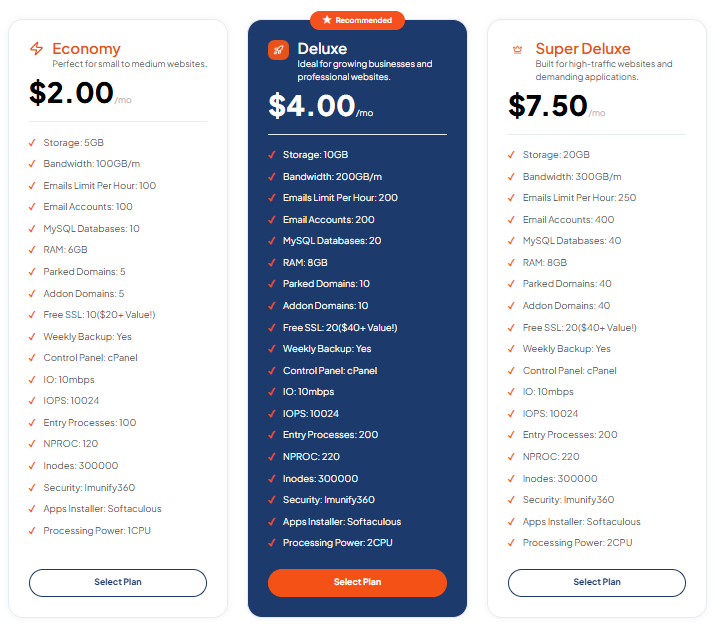
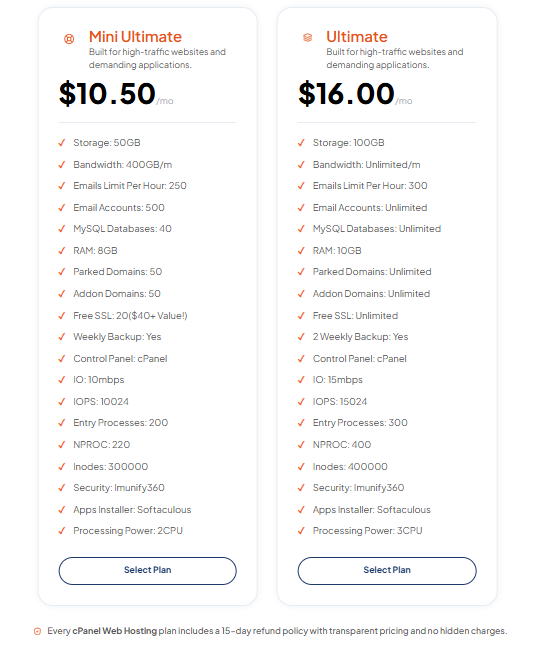
Explore TezHost cPanel Web Hosting and confirm which email features are included in the plan you’re considering.
Option B: Separate Website and Email Hosting
Some businesses prefer to host their website with one provider and email with another.
Potential advantages include:
- Independent website and email infrastructure.
- Specialized mailbox and collaboration features.
- More flexibility when changing web hosts.
- Separate resource management.
- Email-specific security and administration options.
The trade-off may be higher costs and additional configuration work.
Which Option Is Better?
| Business Requirement | Consider a Hosting Email Bundle | Consider Separate Email Hosting |
|---|---|---|
| Small business website | ✓ | |
| Limited number of mailboxes | ✓ | |
| Budget-conscious startup | ✓ | |
| Advanced collaboration requirements | ✓ | |
| Large number of employees | ✓ | |
| Specialized email security needs | ✓ | |
| Independent website and email services | ✓ |
Neither option is automatically better. Choose based on the features your business actually needs.
4. How Do Email Hosting and Web Hosting Work Together Technically?
Email hosting and web hosting work together through DNS records that direct website visitors and email traffic to the correct servers.
This is one of the most important technical concepts to understand.
Your domain name acts as the common identity for both services.
But DNS determines where different types of traffic should go.

Understanding the Important DNS Records
A Record
Connects a domain or hostname to an IPv4 address.
For example, it may direct website traffic to your web server.
AAAA Record
Connects a hostname to an IPv6 address.
MX Record
Identifies the mail servers responsible for receiving email for your domain.
SPF Record
Uses a DNS TXT record to specify which systems are authorized to send email for your domain.
DKIM Record
Publishes information used to verify cryptographic signatures on outgoing email.
DMARC Record
Defines how receiving systems should handle messages that fail relevant authentication checks and provides reporting options.
Why Does This Matter?
Imagine moving your website to a new hosting provider.
You update your domain’s DNS records to point to the new web server.
But what happens to your email?
If you accidentally remove or change the existing MX records, incoming business emails could be disrupted.
Similarly, incorrect SPF or DKIM settings can contribute to email authentication problems.
This is why email hosting vs web hosting isn’t just a pricing decision. It’s also a DNS and infrastructure management decision.
If you’re planning a website move, read our Web Hosting Transfer Service Guide to understand the importance of migration planning.
You can also explore TezHost Domain Services when managing your business domain.
5. Is Email Hosting Secure When Included With Web Hosting?
Email hosting can be secure when included with web hosting, but security depends on the provider’s infrastructure, account configuration, software maintenance, and available protection features.
A professional-looking email address doesn’t automatically mean your messages are secure.
Likewise, purchasing a dedicated email service doesn’t eliminate every security risk.
You still need appropriate authentication, account protection, and administration.

Important Email Security Features
1. SSL/TLS Encryption
Use encrypted connections for supported email services to help protect data in transit.
2. Strong Authentication
Use unique passwords and multifactor authentication where available.
3. SPF, DKIM, and DMARC
Configure email authentication to help receiving systems identify authorized senders and reduce certain forms of domain spoofing.
4. Spam and Malware Protection
Review the filtering capabilities available with your email service.
5. Backup and Recovery
Confirm whether mailbox backups are included and how messages can be restored.
6. Account Permissions
Control who can create, modify, or access business mailboxes.
7. Software Maintenance
Keep relevant mail server software and configurations updated.
What About Email Deliverability?
Deliverability is another important consideration.
Messages may be filtered or rejected because of authentication failures, sending reputation, recipient policies, or suspicious activity.
A correctly configured email service improves your chances of successful delivery, but no provider can guarantee that every message reaches the inbox.
For businesses that depend heavily on email communication, reliability and security should carry more weight than price alone.
6. How Much Does Email Hosting vs Web Hosting Cost?
The cost depends on whether email is included with your hosting plan, how many mailboxes you need, the storage allowance, and whether you require specialized business features.
A small business may find that an eligible web hosting plan provides enough email functionality for its needs.
A larger organization may prefer a dedicated email solution with additional administration and collaboration capabilities.

What Should You Compare?
| Cost Factor | Questions to Ask |
|---|---|
| Hosting subscription | Is email included or charged separately? |
| Number of mailboxes | How many accounts can you create? |
| Mailbox storage | What storage limits apply? |
| Email sending | Are there sending limits or restrictions? |
| Security | Which protections are included? |
| Backups | Are mailbox backups available? |
| Migration | Is existing email migration included? |
| Renewal pricing | Will the cost change after the first term? |
| Technical support | What support is available for email issues? |
Should You Buy Premium Hosting Just for Email?
Not necessarily. Premium web hosting may offer additional resources or features, but it isn’t automatically the best solution for every email requirement.
If your main concern is mailbox storage, collaboration, or email administration, compare those features directly.
If your website also needs more processing power, memory, or performance capacity, a higher-tier hosting plan may make sense.
Our guide, Do I Need Premium Hosting?, explains how to evaluate hosting requirements before upgrading.
The smartest decision is to pay for the resources and features you’ll actually use.
7. Can You Host Business Email Without a Website?
Yes. You can use professional email hosting with your own domain even if you don’t have a website.
This surprises many new business owners.
You don’t need to launch a complete website before creating a professional email address.

For example, a consulting business may want to use:
Even if its website is still under development.
To do this, you generally need:
- A registered domain name.
- An email hosting service.
- Correct MX and related DNS records.
- A configured mailbox.
- Appropriate email authentication settings.
Can You Add a Website Later?
Absolutely.
You can launch your website when you’re ready and continue using the same domain-based email address.
Your website and email can remain with different providers.
What About Plesk Email Hosting?
Plesk is another hosting control panel that can support website and email administration when the relevant services are installed and enabled.
If you’re interested in the technical setup, read our guide on Setting Up Professional Email Hosting With Plesk.
The bottom line: You can establish a professional business email identity before launching your website.
How Is TezHost Simplifying Website and Email Hosting for Businesses?
TezHost helps businesses explore domain registration, website hosting, and related services so they can choose an online infrastructure setup suited to their requirements.
At TezHost, we understand that business owners don’t want unnecessary technical complications.
They want a website that works, professional communication, and hosting services that support their growth.
But not every business has the same requirements.
A freelancer may need a simple website and one email address.
An ecommerce business may require more website resources and several departmental mailboxes.
A growing company may prefer to separate its email infrastructure from its website hosting.
Our approach is to help customers evaluate these needs rather than assume one hosting configuration fits everyone.
1. Hosting Options for Different Business Needs
With TezHost cPanel Web Hosting, customers can explore compatible hosting plans and review available website management features.
If email functionality is important, confirm mailbox availability, storage limits, sending restrictions, and supported security features before purchasing.
2. Domain Registration and Management
A professional online identity starts with a domain.
Through TezHost Domain Services, businesses can explore domain registration options for their websites and branded email addresses.
3. Guidance on Hosting Requirements
Not sure whether to choose a hosting email bundle or manage your email separately?
Our sales team can help you explore available plans and clarify which features are included.
Talk to a TezHost Sales Agent.
4. Resources for Technical Users
We also publish guides covering hosting administration and configuration.
For example, our Plesk Professional Email Hosting Guide can help readers understand important setup considerations.
5. Supporting Business Communication and Growth
Hosting your business email is only one part of communicating with customers.
For businesses planning promotional campaigns and customer outreach, TezHost also provides information about Email Marketing Services.
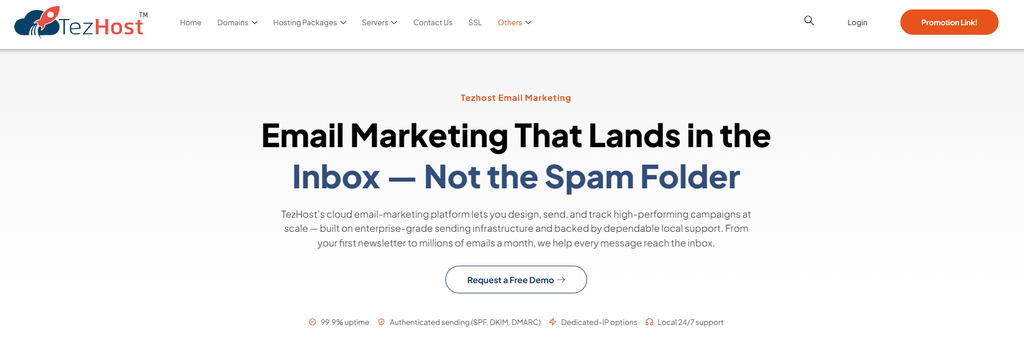
Remember that email marketing platforms and ordinary business mailbox hosting serve different purposes.
Our goal is to help businesses understand their options and choose services that fit their technical and operational needs.
Ready to explore your hosting options?
Register With TezHost or Speak With Our Sales Team.
Frequently Asked Questions
Do I Need Both Email Hosting and Web Hosting?
You need both types of functionality if you want a hosted website and professional domain-based email. However, one hosting package may include both services.
Can I Use My Domain for Email Without Hosting a Website?
Yes. You can register a domain and configure a compatible email hosting service without launching a website.
Does cPanel Web Hosting Include Email?
Many cPanel hosting plans support email services, but availability depends on the provider and plan. Always check the included features and limits.
Is Separate Email Hosting More Secure?
Not automatically. Security depends on infrastructure, authentication, configuration, maintenance, and the protections offered by the provider.
Can I Move My Website Without Moving My Email?
Yes. You can migrate your website while keeping email with its existing provider, provided DNS records remain correctly configured.
What Is a Hosting Email Bundle?
A hosting email bundle combines website hosting and email functionality within one service package. Included features vary by provider.
What Happens to My Email If My Website Goes Down?
It depends on the infrastructure. If email is hosted separately, a website outage may not affect it. If both rely on the same failed server or shared dependency, both services may be disrupted.
Can I Use Different Providers for My Website and Business Email?
Yes. Your domain’s DNS records can direct web traffic and email traffic to different providers.
Conclusion: Do You Really Need Both?
Understanding email hosting vs web hosting can save you from unnecessary expenses and frustrating configuration mistakes.
Your website and business email serve different purposes.
One helps customers find your business online.
The other helps you communicate with them professionally.
The important question isn’t whether you need two hosting subscriptions. It’s whether your business needs both services and how you want to manage them.
Before deciding, remember these seven essentials:
- Understand what each hosting service does.
- Identify your website and email requirements.
- Compare bundled and separate hosting options.
- Check DNS configuration and compatibility.
- Evaluate security and reliability.
- Consider the complete cost.
- Choose a setup that supports future growth.
A smart hosting decision should make your business easier to manage—not more complicated.
At TezHost, we help businesses explore hosting and domain solutions based on their requirements.
Whether you’re launching a startup, building an ecommerce website, or reviewing your existing hosting setup, choosing suitable infrastructure is an important first step.
Ready to Get Your Business Online?
Explore TezHost Hosting Solutions
Let’s discuss: Would you prefer managing your website and business email through one hosting provider or keeping them separate?
Share your thoughts in the comments!